Man Arrested in Train Fire That Killed Woman

A woman died as the result of a burning attack inside a subway car in Coney Island. Sebastian Zapeta-Calil, lit Debrina Kawam, 57, on fire inside a parked F train on Dec. 22 and then reportedly watched from a nearby bench as the fire consumed her. A complaint filed in Brooklyn criminal court said Kawam died of “thermal injuries and smoke inhalation.”

Zapeta-Calil, 33, an undocumented immigrant from Guatemala who was deported in 2018 and returned illegally to the United States later, may plead not guilty when he is arraigned on a formal indictment in the coming weeks, a spokesman for the Brooklyn district attorney’s office said.

He was identified using CCTV footage and found on another train. When he was arrested on that train, he was wearing the same clothes as the man shown in videos of the attack, and he had a lighter in his pocket, according to police. He was charged on Dec. 23 with first-degree murder and arson.

The seemingly random attack has exacerbated worry about safety in the New York’s public transit system.

Putin Apologizes But Stops Short of Admitting Azerbaijani Plane Was Shot Down

Russian President Vladimir Putin apologized on December 28 to Azerbaijan’s leaders for what he referred to as a “tragic incident,” which was the crash of an Azerbaijani airliner in Kazakhstan. Thirty-eight people were killed. Putin stopped short of admitting that Russia was responsible.

The apology came as allegations grew that the plane had been shot down by Russian air defenses attempting to deflect a Ukrainian drone strike near Grozny, the regional capital of the Russian republic of Chechnya.

An official Kremlin statement issued Saturday said air defense systems were firing near Grozny airport as the airliner “repeatedly” attempted to land there on Wednesday. It did not specifically say one of these hit the plane. In the statement, Putin apologized to Azerbaijani President Ilham Aliyev “for the fact that the tragic incident occurred in Russian airspace.”

In the statement Russia says it has launched a criminal probe into the incident. Azerbaijani state prosecutors have gone to Grozny to participate in the investigation. The Kremlin also said that “relevant services” from Russia, Azerbaijan and Kazakhstan are jointly investigating the crash site near the city of Aktau in Kazakhstan.

Aliyev stated that the plane had multiple holes in its fuselage and that the occupants had sustained injuries “due to foreign particles penetrating the cabin mid-flight.” He went on to say a team of international experts had begun probing the incident at Azerbaijan’s initiative. The Azerbaijani Prosecutor General’s office had confirmed earlier that investigators from Azerbaijan were working in Grozny.

On Friday, December 27, a U.S. official and an Azerbaijani minister made separate statements blaming the crash on an external weapon, echoing those made by aviation experts who blamed the crash on Russian air defense systems responding to a Ukrainian attack.

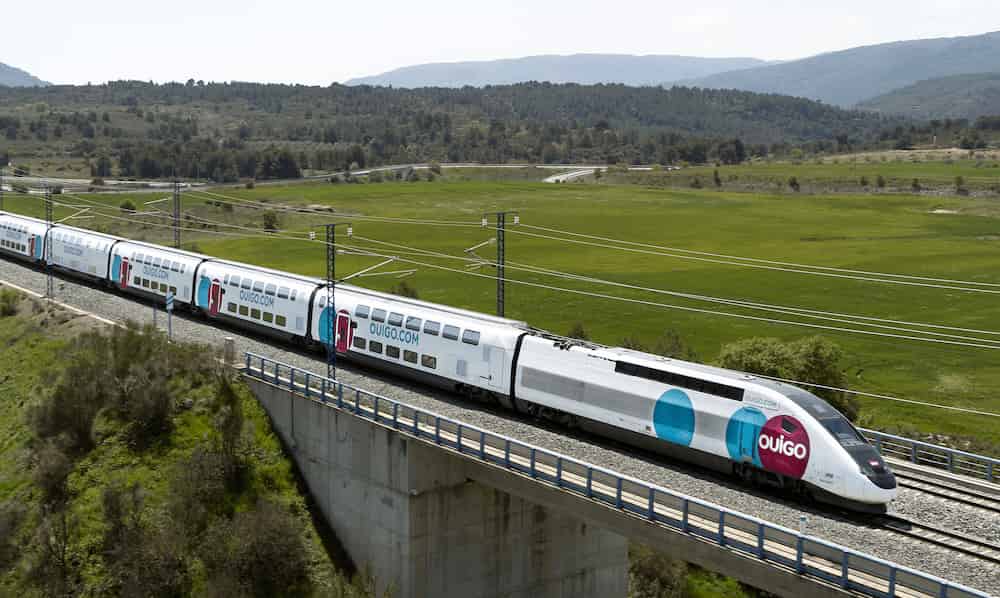
Train Tragedy Averted on Christmas Eve

Hundreds of train passengers avoided harm on Christmas Eve after the train’s driver jumped from the cab. The train was left unmanned with more than 400 people onboard.

French national railway company SCNF said in a statement that the incident occurred on a high-speed line at approximately 8 p.m. on Christmas Eve in the Seine-et-Marne region to the east of Paris when a train driver died by suicide “while the train was moving. The entire railway family is in mourning and is very marked on this Christmas Day by this terrible tragedy,” SCNF added in the translated statement. 

The company said that the train was equipped with new technology called “Automatic Standby with Downforce Control,” which helped it avoided disaster. The system checks to ensure that there’s an “active” driver running the train “at all times.” The system kicked in during the incident and safely brought the train to a stop on the tracks.

The incident “severely disrupted” train traffic to the east of Paris as trains were “diverted by conventional lines in both directions.” This resulted in “longer travel times of around an hour and 30 minutes on average and longer delays for six TGV trains,” the SCNF statement said.

The train’s driver was identified by U.K. newspaper The Times as 52-year-old Bruno Rejony. French transport minister Philippe Tabarot said that he had been suffering from personal problems ahead of the incident and praised the train’s safeguard system for saving the travelers onboard at the time.

“The driver wished to end his life in a solitary action,” Tabarot said on CNews television, in The Times‘ story. “It could have been more serious if he had wanted to derail his train.” 

Vessel Held in Cable Cutting Investigation Suspected of Being Part of Russian “Shadow Fleet”

Finnish authorities seized an oil tanker on Thursday, December 26 on the suspicion it was involved in cutting undersea cables vital to the area. Finland said the ship might have been part of Russia’s “shadow fleet,” aimed at evading Western sanctions.

In a statement, Finnish police said the authorities had boarded the Eagle S tanker in Finnish waters. The ship, which is registered in the Cook Islands in the South Pacific, had been sailing from St. Petersburg, Russia, to Port Said, Egypt, when it was detained.

Finnish authorities said they were investigating if the vessel was involved in the latest suspected act of sabotage on undersea infrastructure: the cutting on Wednesday, December 25th of the Estlink 2 submarine cable, which carries electricity between Finland and Estonia. Finnish authorities said Thursday that four other cables carrying data also had been damaged. The police called the latest cable cuts “aggravated vandalism.”

The Finnish authorities said the tanker might be part of Russia’s shadow fleet, which are being used as a way around Western-imposed price caps on Russian oil transported by sea. The caps were introduced several months after Russian President Vladimir Putin ordered the full-scale invasion of Ukraine in February 2022.

Experts Say Russia’s Air Defense Fire Likely Caused Azerbaijan Plane Crash

Azerbaijan Airlines’ Embraer 190 crashed en route from Baku, Azerbaijan to the Russian city of Grozny on Wednesday, December 25. It had diverted, possibly due to weather, and crashed while making an attempt to land in Aktau in Kazakhstan after flying across the Caspian Sea. Thirty-eight of the 67 people on board the plane were killed in the crash, according to Kazakh authorities, including the two pilots and one flight attendant.

The plane went down about three kilometers (approx. two miles) from Aktau. Cellphone footage captured by onlookers and circulated online show the aircraft making a steep descent before it crashed into the ground and exploded.

Rasim Musabekov, an Azerbaijani lawmaker, told local news agency Turan that the plane was fired on while in the skies over Grozny and urged Russia to offer an official apology. “Those who did this must face criminal charges,” Musabekov as quoted by Turan, said and added that compensation to the victims should also be paid. “If it doesn’t happen, relations will be affected.”

Experts pointed out that the holes seen in the plane’s tail section might indicate that it sustained damage from Russian air defense. A Chechen official said a regional drone attack occurred on Wednesday, however federal authorities didn’t report it.

Mark Zee of OPSGroup said the images of fragments of the crashed plane indicate that it was likely hit by a surface-to-air missile. “Much more to investigate, but at high level we’d put the probability of it being a SAM attack on the aircraft at being well into the 90-99% bracket,” he said.

The tail shows damage similar to shrapnel damage from a small surface-to-air missiles.

Aboard the plane were 42 Azerbaijani citizens, 16 Russian nationals, six Kazakhs and three Kyrgyzstan nationals. Russia’s Emergencies Ministry on Thursday flew nine Russian survivors to Moscow for treatment.

Industry News

Body Discovered in Wheel Well of United Plane After Landing in Hawaii

The body of a person was found in the wheel well of a United Airlines plane that landed in Maui, Hawaii, on Tuesday, Dec. 24.

The body was found in one of the main landing gear wheel wells on a Boeing 787-10 plane after it arrived at Kahului Airport, a statement from United Airlines said. Flight 202 departed from Chicago O’Hare International Airport at 9:49 a.m. and arrived in Maui at 2:12 p.m. local time.

“At this time, it is not clear how or when the person accessed the wheel well,” the airline said in the statement, adding that the company was working with law enforcement to find out more information. The wheel well is only accessible from outside the aircraft.

The Maui Police Department said they are “conducting an active investigation regarding a deceased individual,” in a local news report.

Apparent Vehicle Ramming Incident Kills Five, Injures Many in Germany

A deadly attack on an annual Christmas market in the central Germany city of Magdeburg left five people, including a nine-year-old boy, dead. Another 205 people were injured when a car sped into the crowd on Friday evening, December 20.

Officials say the suspected attacker accessed the market by using a rescue exit that did not have barricades and was able to drive for a full three minutes before police were able to stop and arrest him.

The suspect, was identified as Taleb al-Abdulmohsen, a 50-year-old doctor.  al-Abdulmohsen is a Saudi refugee who came to Germany in 2006 and openly campaigned against Islam, criticized the immigration policies in Berlin, according to reports in the German media.

Reports say the Saudi government told Germany about his “very extreme views. Chancellor Olaf Scholz said the attacker must be punished and said the incident would be investigated in depth.

Locals  paid homage to the victims and injured at the closed Magdeburg Christmas market with flowers, candles and messages of support.

IDEMIA Public Security Secures a 10-Year Extension of its Agreement with the Australian Department of Home Affairs to Enable Biometric Technology and continue to support the Upgraded Smart Gates and Kiosks at Australia’s Airports

IDEMIA Public Security announced a 10-year extension of its agreement with the Australian Department of Home Affairs to continue to support the upgraded arrival systems at 8 of Australia’s international airports in order to provide a seamless travel experience for travelers. This extension comes after IDEMIA’s successful delivery of its biometric border control solution, Gen3 kiosk, at Darwin, Adelaide, Brisbane, Cairns, Coolangatta, Melbourne, Perth and Sydney airport.

The new 10-year agreement enables IDEMIA to continue upgrading Australia’s environment with the latest technology and serves as an extension of its support and maintenance services for the Australian Department of Home Affairs. It is also designed to continue to promote innovation to improve and secure the travel experience at airports.

IDEMIA’s end-to-end border control solution comprising of kiosks and Smart Gates to Australia’s international airports incorporates biometric functionality and capability for travelers. Offering a convenient self-service authentication, travelers complete an initial 1:1 verification against their passport at the Gen3 Kiosk, which enables a match when they present themselves at the SmartGate. The traveler’s face is used as proof of their identity ensuring a smooth experience and shorter wait times at airports.

“I’m thrilled to continue our long-standing 18-year partnership with the Australian Department of Home Affairs and give travelers a secure and convenient airport experience,” said Tim Ferris, senior vice President, travel & transport, IDEMIA Public Security. “With this expansion of our partnership, IDEMIA has the opportunity to facilitate easy technology refreshes for Australia and ensure it has our most up-to-date border control technologies to best serve their residents, as well as travelers across the globe.”

American Airlines Settles Suit Regarding Racial Discrimination

American Airlines released a statement that it had settled a lawsuit claiming it had discriminated against three black men who removed from a flight earlier this year. The three men did not know one another and were not seated together. They were all removed from their plane after a white flight attendant complained about body odor onboard the aircraft. They said they were allowed back on the plane after waiting an hour at an airport gate in Phoenix, before departing for New York.

American and the group that brought the lawsuit did not disclose the amount of the settlement. “We are very pleased that American Airlines took our complaint seriously, and we hope that this never happens to Black passengers or any other people of color again,” the plaintiffs, Alvin Jackson, Emmanuel Jean Joseph and Xavier Veal, said in a statement provided by the Public Citizen Litigation Group, a nonprofit consumer organization that represented them with the law firm Outten & Golden. “Our goal in speaking out has always been to create change,” the men’s statement said. “We are proud that we used our voices to make a difference in the lives of Black Americans.”

The airlines said it strives to have a “welcoming and inclusive environment” for customers. “The agreement allows all parties to move forward and focus on what matters most — ensuring a safe and inclusive travel experience for every customer,” the airline said in a statement.

Industry News

Rohde & Schwarz Unveils Cutting-Edge Automotive Testing innovations, to ADAS, Electric Drivetrain and Connectivity

Rohde & Schwarz unveiled its latest innovations and demonstrations recently at CES 2025. Rohde & Schwarz says it has made significant contributions to advancing the industry’s vision of autonomous driving, electrification and connectivity and for the first time in the U. S., Rohde & Schwarz will show a radical innovation in automotive radar testing.

The new R&S RadEsT automotive radar tester is a compact, versatile radar target simulator that meets the full range of testing needs – from lab-based functional testing to vehicle-level production checks and beyond. Visitors can learn how to streamline radar sensor testing using the R&S RadEsT in radar sensor calibration, ADAS/AD functional testing and on OEM production lines– all along radar sensors lifecycle.

Additionally, visitors will gain insights into the latest testing solutions for in-vehicle networks such as gigabit multimedia serial link (GMSL) and Ethernet connections. These solutions are designed to ensure high-speed data transfer and energy efficiency for next-generation vehicles. Testing GMSL and Ethernet compliance ensures that automotive systems can handle the high data rates required for advanced infotainment and autonomous driving systems.

“We are honored to be at the heart of the automotive ecosystem, providing test solutions that drive the industry’s progress in autonomous driving, electrification, and connectivity,” stated Frank Dunn, Rohde & Schwarz USA CEO. “Our cutting-edge technologies are designed to meet the rigorous demands of modern automotive engineering, ensuring reliability, safety, and performance.”

Demonstrations at the Rohde & Schwarz booth at the CES show floor, will showcase the latest advancements in ADAS sensor fusion and hardware-in-the-loop (XiL) testing. These technologies are crucial for ensuring accurate and reliable data integration from multiple sensors in autonomous vehicles. By simulating real-world driving scenarios and combining them with virtual models, Rohde & Schwarz enables comprehensive testing of complex sensor systems. This ensures that autonomous vehicles can effectively perceive and respond to their surroundings with high precision and reliability, pushing the boundaries of what autonomous technology can achieve.

Even marginal improvements in electric drivetrain efficiency and performance can significantly enhance overall electric vehicle (EV) operation. Assessing the energy efficiency of the entire drivetrain requires precise and detailed measurements. At CES, Rohde & Schwarz will present a solution for OEMs and their suppliers to characterize and optimize drivetrain components, such as inverters and battery management systems. The solution is based on the MFIA from Zurich Instruments, the MXO 5 oscilloscope and the RT-ZISO isolated probing system

Demonstrations automotive connectivity testing including digital key systems using BLE and UWB technologies will highlight secure vehicle access, with Rohde & Schwarz’s tests ensuring top security standards and seamless functionality. Hands-on exhibits will feature EMC and OTA tests for vehicle antennas including digital twin modeling, essential for robust wireless communication and consistent performance under various conditions.