
We often find ourselves wanting to “get closer” to something without actually getting closer. Be it the inspection of infrastructure or detection of potential threats, often the best and most convenient way to get a magnified view of our realm is a pair of binoculars.
Any foray into the binocular market shows a myriad of often-confusing options. Optics have drastically different price points and a dizzying number of specifications associated with each pair. Obviously, not all binoculars are created equally.
Which binoculars are best suited to meet the demands of transportation security professionals? To answer that question, we first need to start with a three-part discussion of binocular basics that will guide the purchasing decision.
Part I — Binocular Basics
You will see two numbers associated with a given pair of binoculars separated by an X. The first digit is the magnification of the optic and the second is the size of the objective lens (the front lens) in millimeters. Example: An 8×42 binocular has 8x magnification and a 42 mm objective lens.
Magnification
Some think that the more magnification in a binocular, the better it is. However, there are definite trade-offs to high powered optics — primarily image stability. The more powerful the optic, the more any movement of your hands is magnified. A shaky image can defeat the whole purpose of the optics — keeping you from having a clear view. Most people can achieve a steady hand-held image with 8x or 10x binoculars at the maximum.
|
Magnification |
|
|
Pros |
The more magnification, the “closer” your view is. |
|
Cons |
Higher magnification reduces the steadiness of your view. |
Objective Lens Size
The larger the objective lens, the more light can enter the optics and the brighter the image. The quality of the glass comes into play here, but, in general, the light gathering mathematics holds true. For use in less-than-ideal (daylight being “ideal”) light, larger objectives will aid the viewing in dawn, dusk, night, or under overcast skies. The downside to larger lenses? Increased size and weight that can adversely affect the portability of your binoculars and make them uncomfortable for extended hand-held viewing.
|
Objective Size |
|
|
Pros |
The larger the lens, the brighter your image — especially in dim light. |
|
Cons |
The larger the lens, the larger and heavier the binocular. |
Configuration: Porro Prism vs. Roof Prism
Binoculars come in two standard configurations — Porro and roof prism. The traditional binocular is the Porro prism where widely spaced objective lenses channel light through two 90o turns and then through the eyepiece. Roof prism binoculars have a straight optical path from objective to eyepiece.
Which is better? With modern optics, the preference is mostly size and ergonomics. Simply, which feels better to your hands?
|
Porro vs. Roof |
|
|
Porro Pros |
Often a larger field of view. |
|
Roof Pros |
Usually more compact and streamlined for a given size — better for portability. |
Focusing: Center Focus vs. Individual Focus
Center focus (CF) binoculars have a focus wheel or knob that controls focus for both eyepieces. Individual focus (IF) binoculars have adjustable focusing on each eyepiece. IF focusing allows viewers to see objects beyond a certain distance in sharp focus without further focus adjustment.
If you are sharing binoculars, there is a disadvantage to IF pairs as the focus needs to be set for each individual’s optical acuity. CF binoculars offer more flexibility when shared as they have more versatility when you want to look at things both near and far from your position. Yes, many CF binoculars often are designed for relatively close-focusing so you can get a closer view of nearby objects as well as distant ones.
|
CF vs. IF |
|
|
CF Pros |
Versatility in focusing on both near and far objects. Best if the optics are shared. |
|
IF Pros |
Basically “focus free” — pick up the binoculars and distant objects are already in sharp focus with no adjustments. |
Part II — Additional Specs and Features
Exit Pupil
The diameter of the image seen at the eyepiece is the optic’s exit pupil. The size is calculated by dividing the objective lens magnification by the magnification. An 8×42 binocular has a 5.3 mm exit pupil. A 10×42 has a 4.2 mm exit pupil.
In the dark, the human eye pupil dilates to around 8 mm. When you look through an exit pupil smaller than that 8 mm diameter, you will notice that you are looking at an image surrounded by a black ring. This is not to say that you should get binoculars with exit pupils larger than 8 mm (that would be a very large, low powered optic), but know that the smaller the exit pupil, the more you will feel like you are looking through a soda straw.
BAK4 vs. BK7 Prisms
Telescopes project an inverted image. Binoculars (and other optical devices designed for terrestrial viewing) will have a prism that erects the image. There are two primary types of prisms in optics — BAK4 and BK7.
BAK4 prisms are engineered to be round in shape and usually provide better light transmission over BK7 prisms. Square BK7 prisms are usually found in less expensive binoculars, but some premium pairs do use BK7 prisms.
Eye Relief
Important for eyeglass users, the eye relief is a specification that shows the distance, behind the eyepiece, where the image is in focus. With a short eye relief, eyeglasses can prevent you from getting your eye close enough to the eyepiece to see the image in sharp focus. To accommodate this, many binoculars have collapsable eyepiece eyecups that allow eyeglasses to get closer to the eyepiece. Alternatively individual diopter adjustments to allow those to see a sharp image without corrective lenses. Many binoculars offer both options so you can use them with or without eyeglasses.
Field of View
When you look through a magnified optic, generally, the more magnification, the smaller the field of view (FoV). However, some binoculars are designed to have a wider field of view for a given magnification. This is advantageous as you can see a wider area — making targeting easier.
FoV is presented as an angular measurement calculated from the width of the view at 1000 yards or meters. The math: 52.5’/degree @ 1000 yds distance or 17.5 m/degree @ 1000 m.

Part III – Other Characteristics
Outside of their configuration and raw specifications, binoculars come with different feature sets to increase their utility for different operating environments.
Waterproof and Fog Proof
Water- and fog proof binoculars will always be better suited for outdoor and marine use. Many are nitrogen or argon filled to prevent condensation from accumulating inside the binocular chassis between lenses. They can even be submerged and then come ashore ready to keep viewing. “Weatherproof” binoculars might be ok in a light mist or survive a splash of hot coffee, but they likely won’t survive a good amount of moisture.
Armoring
Most binoculars are wrapped in some sort of protective rubber armor. This protection helps cushion bumps and can enhance the grip and tactile feel of the optic. Also, a rubber armor will insulate your hands from a metal binocular chassis when used in cold or hot weather.
It is important to note here that good optics are precision instruments, and their performance can be adversely affected if they are not handled with care, with or without armor.
Lens Coatings
Optical coatings can increase contrast, light transmission, and reduce reflections. Binoculars will feature lenses and prisms that are multi-coated, coated, or do not have coatings.
Image Stabilization
Image stabilization (IS) for binoculars is a game-changing technology for optics. IS allows you to achieve a steady(ier) view at much higher magnifications than you can with hand-holding binoculars — sometimes a huge advantage.
IS binoculars will require power (batteries), their mechanical and electronic gizmos add weight, and the optics are still governed by the laws of physics when it comes to things like light gathering, exit pupil size, etc.
Early IS binoculars were prohibitively expensive, but as the technology has evolved, and microelectronics have become cheaper, they are becoming more common.
Zoom
Some binoculars have variable magnification. These are “zoom” binoculars. While photographic zoom lenses often can rival their fixed focal length cousins for clarity and sharpness, the same has not been said for zoom binoculars. It is unlikely you will find a pair of zoom binoculars that make your eyes happy and you will probably never see a pair on a list of recommended optics.
Warranties
Many binoculars come with expansive and even lifetime no-fault warrantees — something to definitely consider when making an investment in higher-priced optical tools.
Cost
As stated earlier, the price points for optics varies greatly. You can find a pair of 8×42 binoculars for around $30 and another pair of 8×42 binoculars for $3,000. The difference between these pairs will be seen in optical performance, features like waterproofing, and quality of construction and materials.
Like many things, in optics there are, basically, three pricing tiers — inexpensive, mid-range, and premium. The difference between a $30 pair of binoculars and a $300 pair can be like night and day. However, the difference between a $300 pair and a $3,000 pair is not quite as noticeable.
Like an audiophile who claims they can hear the difference in music emitted from speakers that cost ten times the price of another pair, only a few of us will really notice the difference between mid-range and premium priced binoculars.
Will inexpensive binoculars work? Yes. Will they last a lifetime and come with a lifetime warranty? No. Will you see a much better view through a mid-range pair of binoculars? Yes. For use on a worksite or for recreational use, mid-range binoculars will always give you the best performance for the price.
Optics For Security Professionals
The Standard — 8×42 or 10×42
For years, the standard birding/hunting binocular has been the full-size 8×42 or 10×42 roof prism binocular. You will likely find that a pair with this specification will meet 90% of security needs. Those with steady hands may enjoy the extra magnification of the 10x pair, but 8x work great for most viewers.
The 8×42 and 10×42 binoculars give a good balance of power and light-gathering while being relatively portable and light enough for extended viewing. Note that many of these binoculars, or like pairs from the same manufacturers, also are available with mid-size/compact objective lenses around 25-30 mm to provide a very similar optical experience in a smaller package.
As these are common binoculars, the purchasing options are plentiful, but you cannot go wrong with the following mid-range pairs:
Nikon Monarch 5
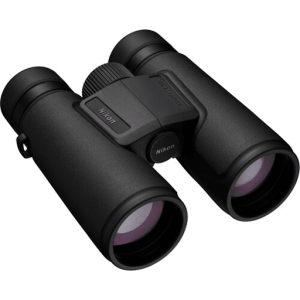
https://www.bhphotovideo.com/c/product/1664166-REG/nikon_16767_8x42_monarch_m5_binoculars.html
Vortex Viper HD
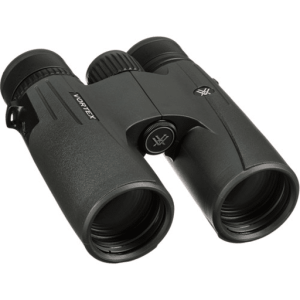
https://www.bhphotovideo.com/c/product/1401561-REG/vortex_v200_8x42_viper_hd_binocular.html
Celestron TrailSeeker
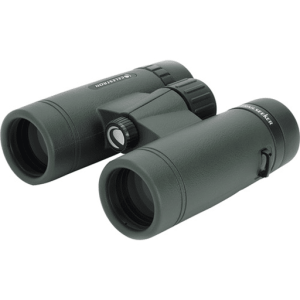
https://www.bhphotovideo.com/c/product/917639-REG/celestron_71404_8x42_trailseeker_binocular.html
Athelon Optics Midas UHD
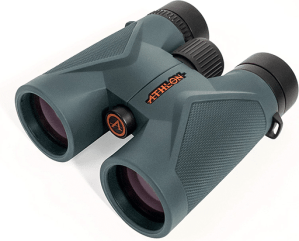
Hawke Sport Optics Endurance ED
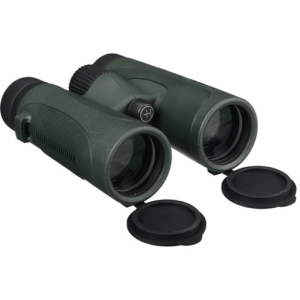
Pocket-Sized
Pocket-sized binoculars lose some light-gathering power but provide additional packability and portability for those traveling light. These optics are perfect for throwing into a small pack or dropping into a jacket pocket — ready for use in a hurry.
Pentax U-Series Papilio II
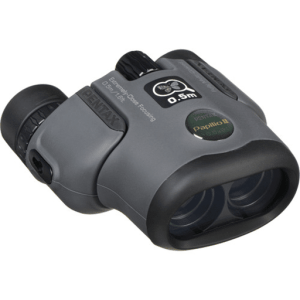
https://www.bhphotovideo.com/c/product/1113227-REG/pentax_62001_6_5x21_papilio_ii_binocular.html
Bushnell PowerView 2
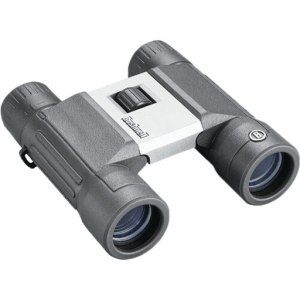
Nikon Aculon T02
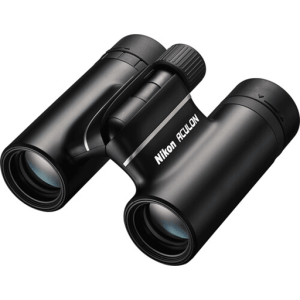
https://www.bhphotovideo.com/c/product/1583254-REG/nikon_16735_10x21_aculon_t02_binoculars.html
Image Stabilized
More IS binoculars are entering the market at (relatively) lower price points and compact sizes.
Canon IS III Image Stabilized
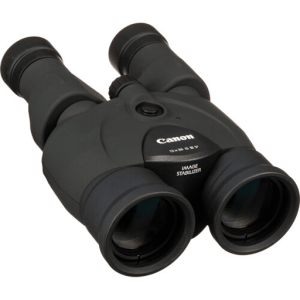
https://www.bhphotovideo.com/c/product/1149461-REG/canon_9526b002_12x36_is_iii_binoculars.html
Fujinon Techno-Stabi Waterproof Image-Stabilized

Nikon S Stabilized
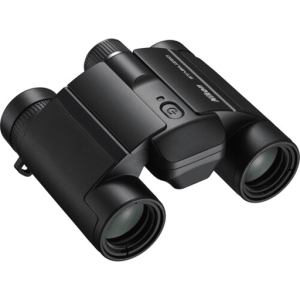
https://www.bhphotovideo.com/c/product/1857844-REG/nikon_16783_xxx25_s_stabilized_binoculars.html
Marine
Traditional marine binoculars are 7×50 due to the ability to get a relatively stable image at 7x power plus great light-gathering capabilities and expansive exit pupils afforded by large objective lenses. Marine binoculars should always be waterproof. Some have built-in compasses for taking bearings and rangefinder reticles for measuring distance from objects of a known height from the water.
Steiner Commander Marine Binoculars with Compass
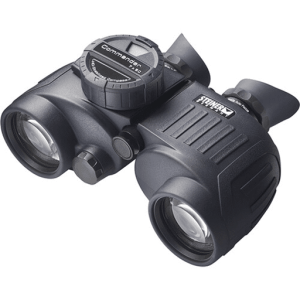
https://www.bhphotovideo.com/c/product/1778980-REG/steiner_2346_7x50_commander_binoculars_with.html
Funijon FMTRC-SX Polaris
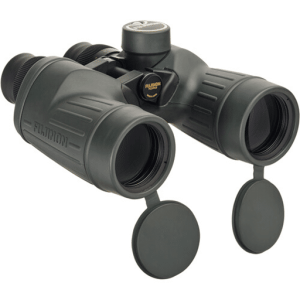
Binoculars for Special Uses/Needs
With a tripod or support you can push the boundaries of binocular performance — selecting optics with very large objective lenses or increased magnification for low light and/or distant viewing. Binoculars with greater than 15x power and 56 mm objective lenses will not lend themselves to prolonged hand-held viewing or carrying over large distances, but, with a tripod, they can be exceptional tools.
Fujinon 16×70 FMTR-SX Polaris

https://www.bhphotovideo.com/c/product/1722910-REG/fujinon_16779835_16x70_fmtr_binoculars.html
Vortex 15×56 Diamondback HD

Celestron SkyMaster Pro

https://www.bhphotovideo.com/c/product/1112575-REG/celestron_72031_skymaster_pro_20x81.html
Fujinon MT-SX Binoculars

Other Optics to Consider
Monoculars
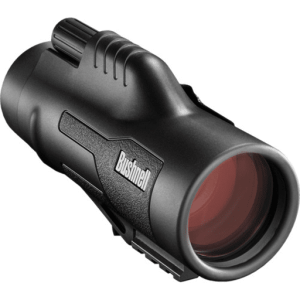
An often-overlooked optical tool to get closer views while being smaller and lighter than binoculars is the monocular. Less than half the size and weight of a binocular of the same specs, the monocular is compact, portable, and also perfect for those with limited vision in one eye.
Bushnell Legend Ultra HD Monocular
https://www.bhphotovideo.com/c/product/845113-REG/Bushnell_191142_10X42_LEGEND_ULTRA_HD.html
Spotting Scopes
On the opposite end of the portability spectrum, spotting scopes are telescopes designed for terrestrial targets — like binoculars they have a prism to erect the image. They are often rugged and waterproof. Their powerful magnification (often up to or beyond 60x) requires them to be mounted on a tripod or other steady mount.
Vortex Viper HD Spotting Scope

https://www.bhphotovideo.com/c/product/1390785-REG/vortex_v502_viper_hd_20_60x85_angled.html
About the Author
Award winning photographer and educator Todd Vorenkamp holds a Master of Fine Arts Degree in Photography from the Academy of Art University. He is a professional photographer specializing in commercial architectural assignments and environmental portraiture, conducts photography workshops and writes for aviation and maritime magazines. Vorenkamp is also a graduate of the U.S. Merchant Marine Academy and is a former naval aviator who has served as an aircraft commander in the Boeing H-46, Sikorsky H-3 and H-60, and Eurocopter H-65 helicopters. An accomplished mariner, he has raced sailboats and sailed across the globe on commercial containerships as a licensed merchant marine officer, holding a 3rd mate unlimited tonnage ocean license, among many other accomplishments.
