Award-Winning Solution to Be Showcased at Major Industry Events Throughout September
ALAMEDA, Calif. – September 9, 2025 – RGB Spectrum, a global leader in mission-critical video solutions for real-time decision support, announced that its IPX Flyaway KitÔ has been named the 2025 New Product of the Year by Security Today magazine in the Security and Risk Intelligence category. The portable, rapid-deployment visualization solution will be showcased throughout September at leading industry events across the country, giving security, defense, and public safety professionals the opportunity to see it in action.
The Security Today New Product of the Year Awards honor the industry’s most innovative solutions that advance protection, improve outcomes, and give professionals the tools they need to make better decisions, faster.
“We’re honored to be recognized by Security Today for the IPX Flyaway Kit,” said Courtney Mamuscia, Senior Marketing Director at RGB Spectrum. “This award highlights our commitment to developing flexible, powerful, and mobile visualization technologies that empower operators to achieve real-time situational awareness—no matter where the mission takes them.”
Why the IPX Flyaway Kit Stands Out RGB Spectrum’s IPX Flyaway Kit is a powerful, portable command-and-control solution purpose-built for mission-critical operations in public safety, defense, and government. Housed in a rugged, transportable enclosure, the kit delivers real-time situational awareness and secure communications anywhere they are needed.
At its core is RGB Spectrum’s industry-leading video processing and AV-over-IP technology, enabling operators to visualize, share, and manage information seamlessly across agencies and environments.
Key Capabilities:
· Video Signal Aggregation: Multiview and combine up to eight video signals simultaneously, including local HDMI® sources, internal computer resources, and network H.264/H.265 streams.
· Content Distribution & Management: Interoperability across 4G/5G/LTE, RAN, SAT, IoT devices, and sensors for a unified operating picture.
· Gateway Services: Bridges private wireless networks with bonded public/private uplinks for maximum flexibility.
· Advanced Connectivity: Bonds LTE, 4G/5G, radio access, and satellite networks to ensure resiliency, enhanced coverage, and expanded bandwidth in the field.
· Plug-and-Play Integration: Easily connects to external PCs, systems, displays, and sensors via HDMI® and Ethernet.
Ideal for Public Safety and Defense
· Public Safety Applications: Enables mobile command vehicles, temporary dispatch centers, multi-agency field coordination, fire basecamps, disaster recovery, and 911 facility backup. From large-scale events to emergency response, the Flyaway Kit ensures continuous visibility and communications.
· Defense Deployments: Provides tactical command capabilities in the field or from military vehicles. Secure, adaptable, and customizable with defense-grade protocols, it supports rapid decision-making in complex environments.
Why Choose the IPX Flyaway Kit? With unmatched portability, rugged design, and advanced video/communication capabilities, the IPX Flyaway Kit transforms how organizations establish command and control in dynamic environments. Whether deployed in a city during a major incident or in a remote theater of operations, it gives operators the confidence to see, decide, and act—faster.
See the IPX Flyaway Kit in Action This September
RGB Spectrum will showcase the IPX Flyaway Kit at four high-profile events this month, each bringing together leaders in security, public safety, and technology:
· Ford INNOVATE – September 11, 2025 | Tulsa, OK A premier platform for connecting, collaborating, and showcasing innovative AV technology for industry professionals. At the Hard Rock Hotel and Casino Tulsa, Innovate brings together Ford staff, customers, and partners to explore next-generation AV solutions.
· NRTCCA Annual Conference – September 22-25, 2025 | Atlanta, GA | Booth #102 with partners Absen and Solutionz The National Real Time Crime Center Association (NRTCCA) leads the charge in advancing real-time crime-fighting capabilities. This year’s conference will feature interactive workshops, networking opportunities, and groundbreaking technologies—including the IPX Flyaway Kit—that give crime fighters real-time intelligence when it matters most.
· GSX – September 29-October 1, 2025 | New Orleans | Booth #3513 with partner NOBLE As one of the largest and most influential security shows in the world, GSX unites security leaders and practitioners to tackle emerging threats and vulnerabilities. RGB Spectrum, alongside NOBLE, will demonstrate how the IPX Flyaway Kit brings rapid, mobile command-and-control capabilities to both military and civilian government agencies.
· CalAPCO – September 30-October 2, 2025 | Sacramento, CA | Booth #330 with partners Wildfire Technology Integration and The Sales Group Hosted by the Association of Public-Safety Communications Officials, CalAPCO provides critical training, professional development, and networking for public safety communications leaders. The IPX Flyaway Kit will be featured in the exhibit hall, showing attendees how mobile visualization can support communications in the field.
Whether it’s airports, train stations, or energy grids, today’s critical infrastructure faces unprecedented threats. Criminals, saboteurs, hostile states, and cyber-physical terrorists are exploiting every weakness, digital and physical alike.
Protecting these vital networks now demands more than locks and cameras. It requires layered, intelligence-driven defenses that combine biometrics, AI, advanced surveillance, and cyber resilience.
What is shaping the next generation of security — from biometric verification at stadiums and airports to hydrogen-leak detection in energy grids — and why the future of critical infrastructure protection lies in integrated, multi-layered strategies.
The Power of Biometric Security
Although there are many forms of advanced access control systems available today, there’s no doubt that biometric-based systems are now vital for keeping all forms of critical infrastructure safe. Such systems assess the unique physical characteristics of people seeking access against their recorded identities through facial recognition, fingerprints, and retinal scans, among others.
Vincent Bouatou, IDEMIA
“Securing critical infrastructure has become a top priority for both public and private sectors, particularly as threats grow increasingly complex and persistent,” said Vincent Bouatou. He is CTO of IDEMIA Public Security, which has over 40 years of expertise in delivering biometric access, border security, and digital identity systems worldwide. “Biometric technology has progressed significantly in both capability and adoption, becoming essential for protecting high-security environments, from airports and military bases to data centers and power grids,” Bouatou told TSI magazine. He noted that modern biometric systems are not only more accurate and resilient but also more user friendly. “They integrate seamlessly with broader security infrastructures, delivering real-time alerts, audit trails, and analytics,” said Bouatou. “Critically, they comply with international privacy and data protection regulations, combining strong security with responsible design, speed, and precision.”
Greg Parker, Johnson Controls
“Biometric technology has advanced to provide more secure and seamless identity verification,” said Greg Parker. He is vice president of life cycle solutions with Johnson Controls, a global provider of smart building solutions. “For example, Johnson Controls systems can use fingerprints, facial recognition and iris scans to replace traditional keycards and PINs. We used these efforts to provide Allegiant Stadium with state-of-the-art security and life safety systems by integrating equipment and technologies including security management with per-event mapping, access control, video management, vehicle security detection, and fire alarm detection. Integration of the video management system with the Las Vegas Metropolitan Police Department helps Allegiant Stadium identify and manage public safety events through built-in identification, alarming and notification systems that can act on the incident, alert the appropriate city responders to engage, and provide orchestrated evacuations through site-wide paging and integrated digital signage and kiosks.”
In the travel sector, the drive towards biometrics is coming from two powerful directions: what travelers are demanding and what airports and governments need to operate effectively.
Dominic Forrest, iProov
“People are simply tired of the friction in the travel journey,” said Dominic Forrest. He is CTO of iProov, which develops facial verification solutions for secure travel and border entry. This is why travelers like biometric identity solutions, because they are faster and more reliable than paper-based systems. “An IATA survey showed that around 73% of people would rather use their biometrics than a paper document,” he said.
On the other hand, organizations like the U.S. Customs and Border Protection (CBP) and the Greater Orlando Aviation Authority are dealing with a massive increase in passenger numbers. “Orlando International Airport MCO, for instance, saw over 800,000 more international arrivals in 2024 alone,” said Forrest. “They need a way to increase their throughput without compromising security. “That’s where our technology comes in: we give them a tool that is not only faster but more accurate than the human eye. We use high-end computing devices to capture video at around 60 frames per second as a traveler approaches. In those two or three seconds, we have hundreds of images to work with.”
Johnson Controls provides Allegiant Stadium located in Las Vegas, Nevada, with state-of-the-art security and life safety systems including security management with per-event mapping, access control and vehicle security detection. Johnson Controls image.
Honeywell has also integrated biometric scanning into access control, combining it with mobile credentials, cloud-based video, and AI-assisted monitoring. “The use of biometrics is primarily employed at critical infrastructure locations to verify identities with more accuracy,” said Ewa Pigna, Honeywell’s CTO of security and access solutions. “Typical access control systems of the past and present rely on plastic credentials, which can be handed to someone not authorized to use them. Biometrics can be used to back up such systems, or serve as standalone access systems in their own right.”
Alex Reichard, Genetec
This comprehensive perspective is shared by Genetec, which provides unified physical security solutions that include video management, access control, and more. “Utilities are increasingly adopting biometric technology in some of their most critical facilities, including highly regulated control centers, operational technology (OT) and industrial control system (ICS) rooms, and power generation sites,” said Alex Reichard, Genetec’s key account manager of utilities and data centers. “Regulatory frameworks like the North American Electric Reliability Corporation (NERC) Critical Infrastructure Protection (CIP) standards place strong emphasis on robust authentication practices in these areas, and biometric solutions, such as fingerprint and facial recognition, play a key role in meeting those requirements. However, adoption of biometrics beyond these high-security zones has been slower, largely due to environmental complexities and connectivity challenges in remote locations.”
People are simply tired of the friction in the travel journey according to Dominic Forrest, CTO of iProov. Travelers like biometric identity solutions, because they are faster and more reliable than paper-based systems.
“While biometric security has developed quickly in recent years, its use in critical infrastructure is progressing more slowly, shaped by regulations and the need for the complexity of operations,” agreed Simo Pikkarainen. He is CTO of ALCEA, a global security solutions provider primarily focused on protecting critical infrastructure. “Biometric data is highly sensitive, and protecting it is fundamental to maintaining trust. That is why we work closely with experts and authorities to ensure that, alongside physical and digital assets, personal information is protected just as carefully.”
Simo Pikkarainen, ALCEA
Biometrics is just part of ALCEA’s end-to-end approach to critical infrastructure security. “At the heart of our offering is ALWIN, a comprehensive solution that supports customers across the full spectrum of security needs, from traditional access methods to the most advanced digital technologies,” Pikkarainen said. “Within this framework, we integrate CLIQ technology, which combines high-security mechanical cylinders with the intelligence of electronic access control. Alongside CLIQ, the ABLOY BEAT keyless locking line answers the demand for connectivity with mobile-based access and remote opening capabilities. And with the ALCEA GATEWAY, we enable seamless integration of connected devices and security solutions, ensuring operators always have the right tool for each situation.”
David Meyers, H2scan
As well, some threats to critical infrastructure have nothing to do with access control. Consider hydrogen leaks, which can lead to devastating explosions if not detected in time. “H2scan’s mission is to provide the highest reliability and accurate sensors for mission critical hydrogen applications such as safety monitoring, grid asset monitoring and chemical process control solutions,” said David Meyers, CEO and president of H2scan. “Our hydrogen detection systems detect hydrogen leaks or the buildup of hydrogen, allowing early action to be taken to avoid damage to plant and personnel. Examples of infrastructure that we protect include refineries and petro-chemical complexes, hydrogen gas generation (electrolyzers), hydrogen blending and pipelines, and battery-energy storage system (BESS) installations.”
This threat applies to transportation critical infrastructure. The reason: “Our asset monitoring offering detects the onset of faults in power transformers, the most critical of the grid and air and rail transport ground assets,” Meyers said. “Transformer faults generally evolve over time (months, possibly longer), and these internal faults (arcing or overheating) are detected by measuring the buildup of hydrogen gas as the transformer oil breaks down. Early detection of faults means they can be repaired or removed from service before they fail, often catastrophically.”
Beyond Access Control
It is clear that biometric-based access control is a major force in securing critical infrastructure. But it is only one piece of the overall security puzzle. “When you look at protecting critical infrastructure as a whole, it’s all about high security,” said Jeff Stanek, Honeywell’s president of security and access solutions. “To achieve this, you’re going to want multi-layers of protection beyond biometrics. So, for us, it starts with integrated safety and security systems. This is access control integrated to your video, to your audio, and to your perimeter detection. Then you bring in advanced surveillance technologies and perimeter protection/intrusion detection systems. And it’s no longer just about physical threats, there’re cyber threats and how you address cybersecurity in your offering is important now.”
Jeff Stanek, Honeywell
Vincent Bouatou reinforced the importance of Stanek’s comprehensive strategy for securing critical infrastructure. “Biometric solutions form the backbone of many modern security strategies, but they are most effective when deployed as part of a layered, multi-technology defense,” he said. “To counter broader threats, AI-enhanced surveillance tools such as video analytics, thermal imaging, and motion detection are increasingly deployed to detect unauthorized entry, monitor perimeters, and identify abnormal behavior.”
Alex Reichard also agreed, but he expands the notion of comprehensive security beyond biometric solutions. “For example, drone detection radars have become essential to secure airspace around critical sites by identifying and tracking unauthorized aerial devices,” he said. “Environmental monitoring tools, such as thermal sensors, can be used to detect intruders based on their heat signatures, and perimeter detection systems, such as LiDAR (Light Detection and Ranging), can help protect large facilities by identifying and tracking any movement beyond the fence line.”
Returning to the definition of access control, Reichard noted that card-based systems can be strengthened to improve critical infrastructure security. “For example, technologies like anti-passback systems prevent credential misuse by ensuring that access cards cannot be shared,” he said. “Advanced card encryption methods can also be used, such as the Personal Identity Verification (PIV) standard, to enhance physical credential security by preventing cloning and tampering.”
Facilities such as government buildings, utilities, healthcare campuses and other high-priority operations are integrating remote monitoring and lifecycle management into their security systems to maintain resilience and rapidly respond to threats, according to Johnson Control’s Greg Parker.
Trends That Matter
Several converging trends are affecting the context of critical infrastructure protection. Chief among them are cyber and physical threats, labor shortages, energy pressures, and geopolitical instability.
“The digital transformation of operational environments — especially the convergence of IT and OT systems — has exposed new attack vectors,” said Bouatou. “Infrastructure such as transportation networks, energy grids, airports, border checkpoints, and healthcare systems are now targets for sophisticated cyberattacks, often through digital gateways. Geopolitical tensions, state-sponsored threat actors, and organized criminal groups have all increased the risk of targeted attacks on national assets. Real-world incidents, such as power grid disruptions and ransomware targeting hospitals, have underscored the urgency of securing both physical and digital systems.”
“Key drivers include the convergence of physical and cyber threats, as the rise of networked building systems requires security strategies that protect both dimensions holistically,” Greg Parker noted. “The demand for frictionless, contactless experiences — accelerated in the post-pandemic era — continues to drive the adoption of biometrics and mobile credentials. Additionally, the growing preference for solutions that anticipate vulnerabilities rather than simply react to them fuels the interest in AI-driven insights and managed security services. Reflecting this shift, investment in real-time threat detection has increased by 22%, representing the industry’s focus on proactive security measures.”
According to Parker, facilities such as government buildings, utilities, healthcare campuses and other high-priority operations are integrating remote monitoring and lifecycle management into their security systems to maintain resilience and rapidly respond to threats. “These solutions aim to mitigate vulnerabilities like physical tampering, insider threats and cybersecurity threats,” he said.
In response to the threats above, governments are strengthening regulatory frameworks. A case in point: “The EU’s NIS2 Directive and the U.S. Cybersecurity and Infrastructure Security Agency (CISA) guidance are pushing critical infrastructure operators to implement auditable, high-assurance security controls,” Bouatou said. “In parallel, zero-trust architecture is gaining momentum. These frameworks require continuous verification of user identity, device integrity, and network behavior — reducing insider threats and limiting lateral movement by attackers.”
The widespread adoption of IoT (the Internet of Things), mobile access, AI-driven analytics, and cloud platforms is also expanding the attack surface. At the same time, physical risks including sabotage, natural disasters, and hybrid threats are requiring security systems to detect and address them in real time. According to Bouatou, “these dynamics are accelerating investment in integrated, intelligence-driven security solutions that combine biometrics, AI, big data, and cybersecurity into a unified defense strategy.”
Genetec’s Reichard added that remote operations and drone incursions represent emerging risks to critical infrastructure. “While remote operations offer flexibility to employees, they require stronger access controls and encrypted communications to keep remote management secure,” he said. “We’re also dealing with nation-state and geopolitical threats and new risks from the growing use of drones. Put all of that together, and it’s clear why there’s a growing push for more integrated security solutions that can tackle these challenges.”
The human factor also plays a role. At a time when more skilled people are required to manage critical infrastructure security systems, finding qualified employees can be difficult. “Across our industry, there is a shortage of skilled labor,” Stanek said. “From what we’re hearing from our customers, over 90% of our channel partners are facing challenges in hiring skilled security operators.” Fortunately, AI is making it possible to automate many operations that were previously handled by human beings. “It’s really about using AI to make security operators more efficient, more intelligent, and more responsive,” he said. “That applies not only to critical infrastructure, but really the whole security industry.”
In response to evolving challenges, the security industry has developed innovative solutions that enhance protection across multiple areas. “For instance, ID badges now often include built-in certification technology like PIV, which makes them much harder to forge or misuse,” said Reichard. “AI-powered video analytics can flag unusual behavior, detect perimeter breaches, or spot unauthorized activity in real time. Meanwhile, on the operations side, managed security services designed specifically for OT and ICS environments provide around-the-clock monitoring and rapid response when something goes wrong. Trend analysis tools also offer valuable insights by analyzing security data over time, allowing organizations to predict and address potential issues before they turn into real problems.”
“To meet rising security demands, a new generation of technologies has emerged, designed for adaptability, resilience, and performance,” Bouatou added. “For instance, IDEMIA Public Security’s MorphoWave can scan four fingerprints in under a second with a simple wave of the hand. It works regardless of finger condition: wet, dry, dirty, or damaged, making it ideal for high-traffic, high-security locations such as airports, stadiums, or research facilities. IDEMIA Public Security’s VisionPass and VisionPass SP terminals offer facial recognition with advanced spoof detection and multimodal authentication, using face, card, and PIN. VisionPass SP, in particular, enables 1:1 verification with on-card encrypted templates, ensuring that both the card and the user’s face are required for access, making it an effective guard against lost or stolen credentials.”
As well, critical infrastructure owners are investing in problem-solving services to secure their properties. This is due to the fact that managed security services allow organizations to outsource complex security functions to experts. Doing so makes advanced security capabilities more accessible and cost-effective to these owners, because such teams can implement 24/7 monitoring, threat detection, and maintenance without their clients having to invest in full-time staff or expensive on-site infrastructure.
“Solutions that provide 360-degree visibility of assets, thereby eliminating blind spots in physical and cyber infrastructures, have become essential to creating peace of mind,” said Parker. “AI has also more recently been squarely in the limelight, and we’ve seen huge leaps in AI innovation and adoption across sectors. In fact, the global AI cybersecurity market was valued at USD $26.55 billion in 2024 and is projected to reach USD $234.64 billion by 2032.”
Regarding ALCEA’s future plans: “Our connected solutions are expanding into the transport sector,” observed Simo Pikkarainen. “These innovations will enhance situational awareness of assets in motion and allow remote control of access, anytime, anywhere. Beyond protecting goods, they safeguard the professionals working within critical infrastructure by enabling remotely controlled access at any time.”“The world of critical infrastructure security is changing rapidly,” he concluded. “Connectivity, digitalization, and global uncertainty present new challenges, but also new opportunities.” The path ahead is clear: biometric verification, AI-driven analytics and cloud-based monitoring are no longer optional add-ons; they are becoming the backbone of a new, layered defense model. As threats grow more complex, the future belongs to organizations that combine cyber and physical safeguards into unified systems. In short, the winners will be those who treat critical infrastructure not as isolated assets, but as interconnected lifelines — protected by intelligent, adaptive security.
IDEMIA’s MorphoWave contactless fingerprint solution scans and verifies four fingerprints in less than one second, through a fully touchless hand wave gesture, the company says. Idemia image.
This story begins back in the 1960s when an American satellite captured an image of a strange object in the Caspian Sea, Russia. It was a gigantic machine never seen before — not a plane, not a ship, but something entirely different. There was even an anecdote about it. One of the U.S. analysts studying the satellite images called the machine a monster. His colleagues joked, “The monster from Loch Ness?” Another analyst replied, “It looks more like the Caspian Sea Monster.”
That so-called Caspian Sea Monster was actually a product of Soviet technology called the Ekranoplane. This machine used ground effect to fly just a few yards above the sea’s surface, reaching speeds of up to 500 km/h (310 mph). It weighed approximately 265 tons and was the size of a Boeing 747. As with many Soviet-era designs, it was built large and powerful — equipped with ten jet engines and capable of lifting 600 tons.
The Soviets had big plans for the Ekranoplane due to its impressive performance: high speed, low radar signature, the ability to fly over naval mines, invisibility to sonar, access to shallow coastlines, and the capability to carry heavy payloads. However, it also had significant disadvantages. The jet engines were vulnerable to saltwater damage, the enormous turning radius made it difficult to avoid obstacles, and it could only operate in calm weather. It was never seen flying over rough seas, which severely limited its usability. Ultimately, the Ekranoplane project was deemed a failure and canceled. After years of testing, the machine was abandoned on the shores of the Caspian Sea, where it now serves as a museum exhibit in the Russian republic of Dagestan. If you’re curious, you can search for “Ekranoplane Lun” on Google Maps to spot it along the Caspian Sea coast.
A Few Words About Ground Effect
The ground effect in aviation occurs when an aircraft flies close to the ground, causing the air beneath its wings to compress. This reduces wingtip vortices, thereby decreasing drag and increasing lift. As a result, the aircraft can fly more efficiently. This aerodynamic phenomenon is especially useful during takeoff and landing, but it can also be leveraged to create specialized vehicles that operate above water surfaces. There’s plenty of information available on the internet about ground effect, so I won’t go into further detail here. Even birds (like pelicans) are using it all the time.
Fast Forward to 2025
Now, let’s jump ahead about 60 years from the Caspian Sea Monster’s initial trials. Aviation and technology have advanced dramatically, with significant improvements in electronics, communication, navigation, propulsion, and materials. The world has changed and so has the approach to business and technological development. It seems like the right moment to reintroduce the concept of a ground-effect vehicle for transporting people and cargo. Such a vehicle could have twice the range of an electric aircraft, transport 12 passengers plus two crew, and always land safely on water.
A small but ambitious company in Rhode Island, REGENT, is revitalizing the old concept with modern technology. Their mission is to reduce the cost and complexity of regional transportation between coastal cities. This is not another “Rhode Island Monster,” but an elegant and highly advanced vehicle —the Seaglider.
REGENT is an acronym that stands for Regional Electric Ground Effect Nautical Transport. Similar to NASA, REGENT is pronounced as a word rather than an acronym. REGENT is always capitalized.
The Seaglider: A Revolution in Coastal Transport
The Seaglider uses wing-in-ground effect to fly just a few meters above the water’s surface, combining the high speed of an airplane with the low operating cost of a boat. It boasts an impressive range — 180 miles (290 km) with current battery technology and up to 500 miles (800 km) with next-generation batteries. Even better, it can operate using existing dock infrastructure, eliminating the need for costly new facilities.
This makes the Seaglider an ideal “island hopper” for places like Hawaii or a fast transportation option for European coastal cities along the North Sea. It could also revolutionize travel between the U.K. and France, over the English Channel, offering a quicker alternative to ferries. In California, it could significantly reduce travel times between San Diego and Los Angeles. Plus, with 100% electric propulsion, it produces zero carbon emissions.
The Seaglider reaches speeds of 160 knots (300 km/h) just 3 yards (2.7 meters) above the water — a thrilling, futuristic concept. Helicopter pilots who fly to offshore platforms often describe the adrenalin rush of low-altitude, high-speed helicopter flights. For Seaglider crew, this will be the new normal.
Airplane or Boat?
A key question is whether the Seaglider should be classified as an airplane or a boat. While passengers likely won’t care, regulatory authorities will, as classification affects certification, costs, and operational regulations.
Seagliders are all-electric hydrofoiling wing-in-ground (WIG) craft, operating entirely over water and within one wingspan of the surface. Under U.S. law, this defines them as maritime vessels, regulated by the U.S. Coast Guard, with technical support from the FAA.
Unlike airplanes, Seagliders are classified as maritime vessels under Type A WIG craft regulations. They fall under the jurisdiction of national maritime authorities and international conventions overseen by the United Nations’ International Maritime Organization (IMO). In the U.S., the Coast Guard is responsible for overseeing their design, construction, and operation. Additionally, Seagliders will receive Classification Notation from an independent Classification Society to ensure safety and seaworthiness.
REGENT is collaborating with the U.S. Coast Guard to certify its first model called Viceroy Seaglider, a 12-passenger vehicle capable of 180 mph (290 km/h) and 180-mile routes on a single charge —meaning it can cover significant distances within approximately one hour.
According to REGENT, Seagliders will meet the highest safety standards, complying with both national and international regulations. Like all regulated maritime vessels, they will undergo rigorous and continuous evaluation and inspection to ensure safety, reliability, and operational excellence.
A High-Tech Cockpit
Having spent my career in aviation, I have always been fascinated by aircraft cockpits. My specialty was cockpit instruments and displays, and I even led a project to certify the first Boeing 747 Classic with electronic displays instead of traditional steam gauges. Naturally, I was eager to examine the Seaglider’s cockpit.
It is fly-by-wire, controlled with sidesticks, and features an advanced digital display suite. The sidestick is quite simple (left-right and fast-slow control) and there will be no need for trained aircraft pilots to ride those vehicles.
When Boeing introduced the 787, they proudly announced that its display area was 20% larger than that of the 777. Well, the Seaglider’s display surface is even bigger than 787. The cockpit is paperless and features:
• A three-axis autopilot
• Moving maps
• Forward-looking sonar
• Maritime radar
• Primary operational displays
• Motor control displays
• Electronic charts
• Synthetic vision mode
• Infrared camera mode
• A traffic advisory system for both marine and aerospace environments
Additionally, the cockpit windows are extremely large, providing excellent situational awareness for operators (if you want you can call them pilots).
The Future of Coastal Transport
The Seaglider model Viceroy is designed to carry two crew members and 12 passengers, with the potential for a VIP luxury configuration (less passengers more luxury). And this is just the beginning. Several strategic investors, including Japan Airlines, Alaska Airlines, Hawaiian Airlines, and Mesa Airlines, have already backed REGENT’s vision. Normally, these companies (airlines) invest in airplanes, but they clearly see the potential of this new category — whether you call it a ship or an aircraft.
REGENT has done its homework. With 40% of the world’s population living in coastal areas — and in regions like Japan and Indonesia, where up to 80% of people live in coastal cities — the market for fast, efficient, and eco-friendly transportation is enormous. If some passengers switch from airplanes to Seagliders, the overall carbon footprint of regional transport could be significantly reduced.
Once the 12-seat Seaglider (Viceroy) is certified and enters service, there will likely be demand for larger models. Reports suggest that a 100-seat version is already in the conceptual phase. If development progresses quickly, we could see these futuristic vehicles operating between coastal cities within a few years.
While the Soviet Ekranoplane ultimately failed, REGENT’s Seaglider has a much better chance of success. With modern technology, advanced materials, and a clear environmental goal, this is the right time for a second attempt. Transitioning to fossil-free, high-speed maritime travel is an exciting prospect.
Final Thought
The REGENT Seaglider represents a bold reimagining of the Soviet-era Ekranoplane, proving that past concepts can be revived with modern technology and a fresh perspective. Unlike its predecessor, the REGENT Seaglider benefits from advances in aerodynamics, lightweight materials, and electric propulsion, making it a viable solution for fast, eco-friendly coastal transportation. With strong industry backing and clear market demand, this revolutionary vehicle has the potential to transform regional travel. If successful, it could mark the beginning of a new era — one where we fly just above the waves, seamlessly blending speed, efficiency, and sustainability. The future of coastal transport is on the horizon, and it’s gliding in fast.
I hope that one day soon, I will get the chance to fly three yards above the sea at 180 miles per hour. How cool would that be?
In this second part of a three-part series, Mario Eisenhut discusses sabotage and a shift in thinking. Part 3 will be published in our Q4 issue and Eisenhut will look to the future and make recommendations about the path forward for maritime security.
Since January 2025, a series of incidents have served as a loud wake-up call for the world. In the Baltic Sea, an important fiber-optic cable connecting Sweden and Estonia was intentionally cut, disrupting data flow across the region and stirring diplomatic tensions throughout Europe. Intelligence reports indicate that the operation was carried out with military-like precision and coordination, though no one has publicly claimed responsibility. This event emphasizes just how vulnerable critical undersea infrastructure has become and emphasizes the increasingly advanced and dangerous tactics used to attack global communication networks. It’s a clear sign that we need to prioritize the security of these systems as threats evolve.
January 2025: Baltic Sea Sabotage and the New Face of Infrastructure Warfare
The year started with a shock when the EstLink 2 subsea power cable – critical for sending electricity between Finland and Estonia – was mysteriously cut in the Baltic Sea. At first, it seemed like an accident, but investigators quickly zeroed in on the Russian-linked oil tanker Eagle S, which was behaving oddly near the cable’s path. Satellite images and marine investigations showed that the ship’s anchor had been dragged, pointing to deliberate tampering. Finnish security officials confirmed that this was no simple mishap, but a targeted act meant to test how well the region could handle such disruptions. This incident had serious consequences, shaking up regional energy markets and raising alarms within NATO. It revealed how easily civilian maritime infrastructure can be exploited for strategic purposes. More importantly, it exposed the lack of proper legal measures to prevent or respond to these kinds of attacks. The event was a wake-up call, showing how modern conflicts can weaponize critical infrastructure, and it emphasizes the urgent need for better protection and international cooperation to defend maritime assets.
February 2025: Taiwan’s Cable Sabotage and the Gray Zone Strategy
Just a few weeks later, tensions in the Indo-Pacific grew even more. Taiwan detained the Hongtai, a Togolese-flagged ship with a Chinese crew, after an undersea cable connecting Taiwan to its strategically important Penghu Islands was cut. This was already the second similar incident in less than a month, sparking suspicions of repeated sabotage disguised as normal commercial activity. When inspectors examined the ship, they found signs that indicated deliberate contact with the seabed cable. Taiwanese officials condemned the act, labeling it part of China’s “gray zone” tactics — subtle, non-military actions designed to destabilize without directly provoking military conflict. As Taiwan responded by strengthening its defenses, analysts warned that such cable cuts could become a new, sneaky way to pressure and influence cross-strait relations, with serious implications for regional stability and the safety of undersea infrastructure.
March 2025: Cable Attack Emphasizes Growing European Infrastructure
Concerns in March, a troubling incident unfolded when a key undersea cable linking Germany and Finland was damaged — raising new worries about Europe’s critical infrastructure. The damaged cable, found near Swedish waters, caused momentary power outages across parts of Central Europe.
Divers later confirmed signs of sabotage, including scratched metal and moved fiber bundles, like previous attacks. Authorities also observed a suspicious vessel nearby that didn’t have any flags and managed to avoid being identified before security responded. In response, Sweden, Germany, and Finland quickly coordinated their security efforts, while the European Commission called an emergency meeting in Brussels. It became clear that these events weren’t just random accidents but part of a coordinated effort testing Europe’s resilience. The Baltic attack added momentum to calls for a unified European Subsea Security Command and renewed debates within NATO on how prepared they are for unconventional threats, especially in maritime areas.
April 2025: U.S. Halts Empire Wind Project Amid Security Concerns
In April, attitudes toward offshore energy infrastructure shifted in the United States — not because of foreign sabotage, but due to domestic security worries. The Biden administration suddenly paused work on the Empire Wind project, which was supposed to be one of the biggest offshore wind farms in the country. While officials cited regulatory problems, insiders hinted that broader national security issues played a big part in the decision. There were reports of military radar jamming, foreign vessels operating near U.S. offshore zones, and growing tensions between energy goals and national defense. Although no direct sabotage was detected, the halt signaled a new understanding: offshore energy installations are now seen as potential strategic vulnerabilities, not just economic assets. Critics argued that this move was a concession to fossil fuel interests, but defense experts saw it as prudent — an important reassessment of security risks. Regardless of the reasons, the decision sent ripples through the renewable energy sector, hinting that future offshore projects might face increased security checks that go beyond normal environmental rules.
A Global Wake-Up Call
The first four months of 2025 have shown a clear and worrying trend: critical maritime infrastructure, which once seemed secure and mostly hidden, is now becoming a key battleground for global influence. The methods used are both sneaky and highly advanced, including shadow fleets with their transponders turned off, sabotage at anchor points, underwater drones, and powerful signal jamming.
These tactics show a shift in how nations project maritime power — moving toward covert, tech-enabled strategies that make detection and attribution difficult but pose serious risks to global security and critical infrastructure. From the Baltic Sea to the Pacific, these disruptions aren’t just random incidents, they’re part of a larger pattern.
These alerts are strategic warnings. The mix of cyber, electronic, and physical breaches into essential marine systems calls for an immediate and united global effort. As our world moves faster into digital technology, cleaner energy, and more decentralized systems, the significance of undersea cables and offshore networks has skyrocketed — and so has their vulnerability. What became clear in 2025 is straightforward: the next crisis might not come with loud explosions or traditional battles, but rather through quiet disruptions like a fiber-optic cable being cut deep under the ocean. Together, these events emphasize a worrying trend: our maritime infrastructure is no longer safe from secret attacks. The way conflicts happen today is changing, and our defenses haven’t kept up with the pace needed to protect these critical assets. As we grow more dependent on undersea systems, so must our efforts to defend them from increasingly clever and subtle threats.
Geopolitical Dynamics: Maritime Infrastructure as a Strategic Power Lever
For people working in maritime transport, the oceans have long been the backbone of global trade. Ports, shipping routes, and underwater infrastructure may often go unnoticed, but they’re what keep our economy moving behind the scenes. These essential pathways are now facing new risks, especially as countries compete more fiercely and hybrid warfare tactics become common. In today’s world, the safety of maritime infrastructure is more important than ever, and its vulnerabilities are a growing concern amid rising tensions and new kinds of threats.
Countries like China and Russia have made huge strides in developing advanced underwater technologies. These aren’t just for exploring the depths or conducting research, they’re increasingly used for strategic purposes, such as controlling critical areas or interfering with networks. From highly sophisticated submarines capable of stealth operations to underwater drones that can map cables or sabotage key targets, maritime infrastructure has become a major point in geopolitical rivalry. These investments are part of long-term strategies to influence essential chokepoints, fiber-optic internet cables, and energy pipelines — giving these nations more use over global markets and security.
For those working in shipping, logistics, port management, or insurance, this shifting threat environment calls for immediate action and strategic planning. The industry isn’t only dealing with weather or piracy anymore; it’s facing threats related to state-sponsored technological conflicts. As rival powers compete beneath the waves, maritime businesses find themselves on the front lines of a new kind of conflict, where infrastructure that once seemed minor now sits at the center of strategic vulnerabilities. The underwater infrastructure supporting the internet, global finance, shipping logistics, and energy supplies is one of the most critical — and vulnerable — parts of modern civilization. Even a single disruption to subsea fiber-optic cables, which often connect at key maritime hubs, can cause serious ripple effects: halting real-time tracking, delaying cargo updates, and disrupting port operations. Similarly, underwater energy links — like gas pipelines and offshore power lines — are becoming more exposed, risking regional energy stability.
As these systems grow more essential to daily life worldwide, protecting them must be a top priority for nations and international groups. While authoritarian countries benefit from centralized control and long-term planning, democratic nations often face fragmented rules, complex regulations, and uneven resources, leaving essential underwater infrastructure more exposed. This imbalance creates major risks not just for individual nations but for the stability of global trade and logistics networks. For the maritime industry, underwater infrastructure can no longer be seen as a background concern. It’s a frontline asset that, if compromised, could cause major disruptions, raising insurance costs, delaying shipments, and threatening supply chains overall. In today’s interconnected world, safeguarding these systems is critical to maintaining both business continuity and national security.
About the Author:
Mario Eisenhut is a maritime professional with experience that includes diverse roles across multiple maritime projects. Eisenhut‘s career has included positions such as marine coordinator, risk advisor, yacht service manager, business development manager, project manager and captain. He is skilled in risk analysis, with hands-on experience as a test manager for drone operations, focusing on safety management. Currently he is serving as a marine coordinator in the North Sea, overseeing ship activities, managing permits and ensuring operational seamlessness. He can be reached at m.eisenhut@consulting-eisenhut.de.
The Australian government has warned travelers heading to Indonesia, after protests gripped the country. Six people reportedly have died in the anti-government demonstrations, with the largest occurring in the capital city of Jakarta.
The recent anti-government protests have been ongoing in Indonesia since early 2025, sparked by a variety of issues related to economic hardship, perceived corruption and police brutality. While large-scale violent demonstrations peaked in August, smaller-scale protests and political tensions continue.
An explosion aboard the coal-carrying MV W-Sapphire in Baltimore’s harbor caused a temporary closure of the Fort McHenry Federal Channel on August 18. The explosion blew a hatch off of the ship and into the water. However, no one was injured aboard the 751-foot vessel, which was en route to East Africa. The ship was due to arrive in Mauritius in a month.
“The U. S. Coast Guard is the lead agency in the response and will determine when the channel can safely reopen, as well as the timing of vessel arrivals and departures,” port officials said in a news release.
The incident occurred near the site of last year’s fatal Francis Scott Key Bridge collapse, and the cause of the explosion is currently under investigation. The channel was reopened by the following day.
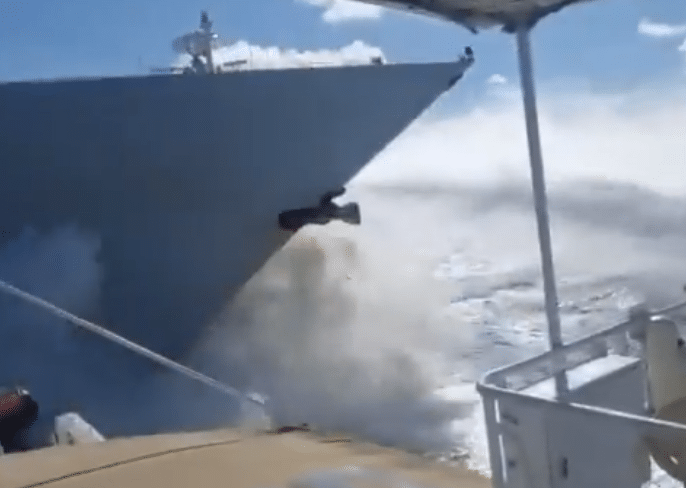
A Chinese navy warship collided with a Chinese coast guard vessel on Monday, August 11, while it was chasing a Philippine patrol boat at high speed in the South China Sea, according to Philippine officials.
The incident occurred near Scarborough Shoal, a disputed area claimed by both nations.
Footage shared by Philippine coast guard spokesperson Jay Tarriela shows a Chinese coast guard ship pursuing the Philippine patrol boat before a Chinese navy vessel suddenly cut across its path. The patrol boat was part of a resupply mission delivering fuel and provisions to Filipino fishermen in the area, under a government initiative to support the country’s fishing industry, according to the Philippine Information Agency.
In the video, the coast guard vessel collides with the navy ship’s port side, bringing both Chinese vessels to a stop as the Philippine boat continues on. Tarriela said the crash happened after the Chinese coast guard attempted a “risky maneuver,” leaving its vessel with “substantial damage.”
The Chinese coast guard, however, blamed the Philippines. Its spokesperson Gan Yu told state news agency Xinhua that Philippine vessels had intruded into Chinese waters and ignored repeated warnings. He did not acknowledge a collision but insisted that Chinese actions were “professional and legitimate.”
The clash is the latest in a string of confrontations in the South China Sea, where Chinese ships have rammed Philippine vessels and blasted them with water cannons in recent years. Tarriela said Chinese vessels also deployed water cannons during Monday’s encounter, though Philippine boats managed to avoid them.
Benchmark Electronics announced the successful completion of the delivery of 24 Mobile Vehicle Surveillance Systems with Radar (MVSS-R) for U.S. Customs and Border Protection (CBP) and the Federal Aviation Administration (FAA). This delivery, completed on time and within budget, reaffirms Benchmark’s commitment to excellence in developing and deploying advanced surveillance technology that leverages artificial intelligence (AI), radar, and sensor technology to deliver practical, robust solutions to real-world challenges.
“As the demand for intelligent, high-performance surveillance solutions continues to grow, Benchmark remains committed to delivering advanced, scalable technologies like MVSS-R, which address the evolving needs of our U.S. government customers,” said Jeff Benck, president and CEO, Benchmark. “We continue to expand our expertise on our enhanced platform with critical technologies such as AI, radar, and advanced sensors to ensure that our solutions remain at the forefront of the mission-critical security and monitoring applications.”
The MVSS-R platform integrates leading-edge AI-powered sensor fusion and advanced radar technology to deliver unparalleled situational awareness in dynamic environments. By leveraging Benchmark’s expertise in complex systems integration, the program enhances surveillance efficiency and operational effectiveness by seamlessly coordinating radar, AI-based video analytics, and electro-optical/infrared (EO/IR) sensor systems. Benchmark is also working with CBP to address emerging needs, such as enabling autonomous surveillance operations with the MVSS-R platform.
Developed and Manufactured in the U.S.
The program was led by Benchmark Secure Technology (Secure), a U.S.-based aerospace and defense focused solutions team within Benchmark that develops and deploys custom, ruggedized technology and surveillance solutions. To develop this system, Secure worked closely with Customs and Border Protection leadership and agents in the field. As a full-service engineering and manufacturing partner, Secure oversaw the entire product lifecycle, from concept to final assembly, ensuring the highest quality and performance standards. Secure’s expertise as a technology integrator ensured that CBP and the FAA received a field-proven, highly capable solution optimized for their application.
Each MVSS-R unit was designed and assembled in the United States, reinforcing Benchmark’s commitment to delivering high-quality, reliable solutions through domestic production capabilities. Over half of Benchmark’s manufacturing capacity is in North America, including ITAR-registered manufacturing facilities in California, Arizona, Minnesota, New Hampshire, Alabama, and Mexico.
Driving Innovation Through Strategic Partnerships
Benchmark Secure Technology’s approach to the MVSS-R platform highlights the company’s ability to collaborate with industry-leading technology providers to develop innovative surveillance solutions. The latest MVSS-R units incorporate cutting-edge technology from partners such as SRC, Inc., PureTech Systems, and Advanced EO Systems, exemplifying Secure’s role as a trusted integrator of best-in-class subsystems, delivering comprehensive solutions tailored to mission-critical applications.
This delivery builds on Benchmark Secure Technology’s longstanding success in providing advanced surveillance solutions. Benchmark’s ongoing work highlights its ability to integrate best-in-class technology into highly functional, field-ready platforms that address today’s most complex operational challenges. While initially developed for CBP, the MVSS-R system can meet the advanced surveillance needs of other U.S. Government agencies and is available through GSA Advantage.
In a landmark deal signed Tuesday, August 5, Japan inked a deal with Australia to supply the Royal Australian Navy with three, upgraded Mogami-class multi-role frigates built in Japan from 2029. Eight more frigates will be built later in Australia.
Mitsubishi Heavy Industries will build the ships that are designed to hunt submarines, strike surface ships and provide air defense and only require a crew of 90. Australia says it plans to use the ships to on critical maritime trade routes and its northern approaches in the Indian and Pacific Oceans, an area in which China’s military footprint is expanding.
“It’s going to be really important in terms of giving our navy the capability to project, and impactful projection is at the heart of the strategic challenge,” Australian Deputy Prime Minister Richard Marles said during a press briefing.
Bali has had a rash of boat tragedies and is reeling from another deadly one after a ferry flipped between Nusa Penida and Bali. Five Australians were among the survivors in a grim reminder of Indonesia’s troubled boating safety record.
On Tuesday afternoon, August 5, a speedboat ferrying passengers from Nusa Penida to Bali capsized after being struck by a wave.
There were 80 people onboard and two people were confirmed dead, and one remained missing. One eyewitness said, “It was going way too fast,” and “at a terrible angle.” This is the fourth serious boat accident in Bali this year alone.