Regula Launches Full Support for Digital Travel Credentials in Latest Software Update

Regula, a global developer of forensic devices and identity verification solutions, has updated its Regula Document Reader SDK. Now, the software fully supports the new Digital Travel Credential (DTC) format, aligned with the International Civil Aviation Organization (ICAO) standards. This enhancement enables governments, airlines, and border control authorities worldwide to process travel documents with unmatched security, efficiency, and ease—whether on-site or remotely.

The DTC is a secure digital solution that streamlines travel experiences. It consolidates key personal information into a single virtual document that travelers can store on their mobile devices or upload to their digital wallets and share whenever needed. The main goal of the DTC is to facilitate clearance procedures during travel and ensure that people are eligible to enter their destination before they board a flight.

The process of DTC-VC creation

The ICAO has defined three types of DTC, each offering varying levels of convenience and security for travelers.

  • DTC Type 1 allows travelers to create their own digital credentials by extracting a Virtual Component (DTC-VC) from a physical electronic identity document, stored on their personal device. However, travelers must still carry the original document for identity verification.
  • DTC Type 2, issued by authorities, combines a cryptographically linked Virtual Component (DTC-VC) and a Physical Component (DTC-PC). This format adds an extra layer of security while maintaining a connection to the physical document.
  • DTC Type 3 represents the future of travel identification: a fully digital document issued directly by authorities. Unlike the other types, it eliminates the need for a physical ID, streamlining identity verification for a completely digital experience. 

Now, with Regula Document Reader SDK, users can create and reprocess DTC-VC from ePassports, and verify it by passing DTC-VC data as input. Also, support for handling DTC-PC has been introduced. The updated Regula Document Reader SDK can:

  • read the document’s RFID chip with a smartphone or passport reader and create DTC-VC;
  • recognize, read, and verify DTC-VC with a smartphone, passport reader, or server;
  • read DTC-PC with a smartphone or passport reader, parse its data, and verify it.  

The updated Regula Document Reader SDK is equipped with advanced features that fully support DTC implementation.

  • Trustworthy NFC verification. First and foremost, it provides trusted server-side NFC verification of the ID so it ensures accurate and trustworthy DTC-VC creation. Since all the data from the chip can be verified on a secure server, there is no need to question the reliability of the checks performed by a mobile device (which is prone to manipulation). Such an approach ensures that the virtual component of a traveler’s document is secure and taken from an authentic ID.
  • Compliance with ICAO guidelines and technical reports. Regula Document Reader SDK not only verifies DTCs but also guarantees that each DTC fully complies with ICAO guidelines and technical reports. This makes Regula’s solution an indispensable tool for airlines and governments so they can be confident in the validity of travelers’ DTCs.
  • Future-ready technology. In addition to supporting DTC-VC, Regula’s technology is fully compatible with handling DTC-PC. Looking further ahead, Regula is ready to process DTC Type 3, a digital passport that is expected in the next several years.

To facilitate the fast and smooth global application of DTCs, Regula Document Reader SDK relies on the most comprehensive identity document template database, which is owned and maintained by Regula. Currently, it contains more than 14,000 ID templates from 251 countries and territories, and it’s constantly growing.

Regula Document Reader SDK is designed for easy integration into third-party applications, allowing clients to incorporate this advanced DTC-ready technology seamlessly into their existing systems. With customizable options, businesses can adapt the solution to meet their unique operational requirements while providing end users with a secure, streamlined digital experience.

“We see that the world is rapidly moving to embrace digital IDs. According to the Forrester Consulting study commissioned by Regula earlier in 2024, nearly half of businesses around the world, 42%, are actively integrating digital IDs into their systems. For the Aviation sector, this rate is even higher: 50%. By ensuring full DTC support in the latest update of Regula Document Reader SDK, we are helping our clients to smoothly transition to the future of travel, where secure, digital-first solutions redefine the passenger experience.” — Ihar Kliashchou, Chief Technology Officer at Regula

Smiths Detection Lightweight Chemical Detectors (LCD) Selected by Japan Ministry of Defense

Threat detection and security screening technologist Smiths Detection is to supply LCD 4 personal chemical detectors to the Japan Ministry of Defense (JMOD) for deployment via its Ground Self-Defense Force (JGSDF).

Following an extensive and competitive product evaluation by the JMOD, the LCD3.3 and LCD 4 were chosen for their exceptional performance and flexibility. Easy integration into the JMOD system were also key selection factors.  

“The JMOD’s decision to invest in this technology underlines the LCD’s status as the most widely deployed personal chemical detector in armed forces across the globe,” commented Dr. Sarah Robinson, portfolio director – CBRNE at Smiths Detection. “We are customizing this new consignment to meet the specific detection demands of the JMOD and, of course, to include a Japanese language option.”

Compact and wearable, the LCD 4 provides advanced warnings, detecting and identifying gas and vapour threats at or below immediate danger to life and health (IDLH) levels. Using the latest Ion Mobility Spectrometry (IMS) technology, it can determine the agent or type, class, concentration and dosage of chemical exposure.

In the future, a simple XID add-on could expand the gas and vapour detection capabilities to include solid and liquid sampling; plus detection of narcotics, explosives and low-volatility chemical traces such as Novichok (a new chemical warfare agent).

Handled locally by Smiths Detection’s distribution partner, S.T. Japan, the contract includes a total of 462 units with delivery staggered between January and March 2025 and January 2026.

Italian Rail Requests Authorities to Investigate Power Outages

The national railroad of Italy filed a formal complaint with law enforcement authorities in Mid-January alleging power outages that occurred throughout the country that have caused days of train delays are of a suspicious nature.

The outages, that have occurred during peak times on rail lines from of Rome, Milan and other cities “can’t be a coincidence” said Ferrovia dello Stato, which runs the Trenitalia system. It didn’t explicitly allege sabotage but in a statement said, “The type of failures and their frequency are raising more than a few questions.”

Minister for relations with parliament Luca Ciriani acknowledged the outages but maintained the problems weren’t chronic and that the recent delays were not out of the ordinary. Minister Ciriani pledged the government’s commitment to improving the rail service using European Union funds.

Recent chaos on Italy’s rail system has been a headache for Transport Minister Matteo Salvini, with opposition lawmakers saying he is neglecting his job to position him self for other, higher profile ones.

Critical Infrastructure Protection with Automated People Screening from dormakaba and Rohde & Schwarz

dormakaba and technology company Rohde & Schwarz are expanding their partnership from the airport business area to the critical infrastructure sector. Both partners have developed a new innovative solution for people screening that will be presented at the BAU 2025 trade fair in Munich. The automated access solution simplifies necessary security checks and increases capacity and efficiency. The global pilot projects to test the system have been expanded and are currently taking place in the USA, Singapore and the Netherlands. Trial operations at Munich Airport are also expected to begin in January 2025.

The APS (Automated Personnel Screening) solution originally developed for airports by dormakaba and Rohde & Schwarz will also be offered for use in other critical infrastructures such as power plants, research laboratories, and data centers after a test phase. This automated personnel screening is a new approach worldwide based on mature technologies, products, and solutions within the dormakaba and Rohde & Schwarz portfolios, and it is set to revolutionize access protection.

The system combines security interlocks with AI technology for position guidance from dormakaba and a security scanner for people screening from Rohde & Schwarz. The Rohde & Schwarz millimeter wave scanner not only detects metallic objects but also, for example, ceramic knives or suspicious liquids and can thus counter modern threats such as 3D-printed weapons without metal parts. Manual intervention at the exit of the dormakaba security gate is only required if objects are detected.

Till Reuter, CEO dormakaba, says: “We are pleased to expand our technology partnership with Rohde & Schwarz to protect critical infrastructure. The automated access solution we have jointly developed meets the latest security standards and prioritizes efficiency and user-friendliness. With this pioneering innovation, we are creating new markets while also meeting the rapidly growing demand for people screening in the critical infrastructure sector.”

Andreas Pauly, CTO Rohde & Schwarz, adds: “We are pleased to be expanding our cooperation with dormakaba. Together with our partner, we offer an intelligent solution with state-of-the-art technology that addresses current threats and optimizes the protection of critical infrastructure worldwide. With decades of expertise in high-tech communication and security solutions, we are helping to provide innovative and reliable systems that meet the growing challenges of modern security standards.”

Savox Secures Order for Advanced Dismounted Systems from a NATO Country Defence and Security Force

Savox Communications, mission-critical communications and hearing protection solutions provider, announced the receipt of a significant new order from a defense and security force in a NATO member country. The order from this prestigious client underlines their continued trust in Savox.

The contract, valued at several million, encompasses the delivery of the Dismounted System for Dual Radio Use, which includes:

  • NC-200 Tactical Headset
  • Trics C2 Communication Control Units

The Savox’s Dismounted System ensures seamless communication across dual radio channels, empowering defense and security teams with superior situational awareness and operational efficiency during critical missions.

“We are honored for the trust in Savox,” said Marcus Österberg, sales director at Savox Communications. “This order reaffirms our commitment to delivering innovative solutions tailored to the demanding needs of modern Defense and Security operations.”

Savox’s solutions are known for their ruggedness, versatility and ease of integration into diverse operational environments. The system provided under this contract exemplifies Savox’s dedication to enhancing communication capabilities in the field, ensuring users can perform their duties with the highest level of safety and effectiveness.


NSF Invests $15M in Four Academic Institutions for Cybersecurity Scholarships

The U.S. National Science Foundation recently awarded CyberCorps® Scholarship for Service (SFS) grants to four academic institutions in an investment of nearly $15 million toward training the next generation of cybersecurity professionals and strengthening the cybersecurity workforce at government organizations.

“For nearly 25 years, the SFS program has been addressing the nation’s critical shortage of cybersecurity professionals in the field,” said NSF Director Sethuraman Panchanathan. “This next cohort, focusing on cutting-edge technologies like artificial intelligence, autonomous systems security, next-generation wireless, cybersecurity for smart manufacturing and more, is poised to make significant contributions to our national and economic security. Their work will contribute to the success of this great program and further strengthen the nation’s cybersecurity landscape.” 

Spanning 43 states, the District of Columbia and Puerto Rico, the NSF CyberCorps SFS program not only extends full scholarships and stipends to students but also forges a modern approach to cybersecurity education. The recipients of these scholarships commit to contributing their expertise to federal, state, local or tribal government cybersecurity roles post-graduation.

Three of the four 2024 award recipients are new to the SFS program. The awardees and their projects are:

CyberCorps Scholarship for Service: Developing the Next-generation Cyber Workforce, Washington State University

CyberCorps Scholarship for Service: Training Iowa’s Cyber Talents to Protect the Nation’s Critical Infrastructure, Iowa State University 

CyberCorps Scholarship for Service: EAGLE: Empowering American Government Leadership in Cybersecurity through Education, George Mason University 

CyberCorps Scholarship for Service: The New Buckeye Scholarship for Service Program, The Ohio State University 

More information about CyberCorps SFS can be found at nsf.gov.

Man Arrested in Train Fire That Killed Woman

A woman died as the result of a burning attack inside a subway car in Coney Island. Sebastian Zapeta-Calil, lit Debrina Kawam, 57, on fire inside a parked F train on Dec. 22 and then reportedly watched from a nearby bench as the fire consumed her. A complaint filed in Brooklyn criminal court said Kawam died of “thermal injuries and smoke inhalation.”

Zapeta-Calil, 33, an undocumented immigrant from Guatemala who was deported in 2018 and returned illegally to the United States later, may plead not guilty when he is arraigned on a formal indictment in the coming weeks, a spokesman for the Brooklyn district attorney’s office said.

He was identified using CCTV footage and found on another train. When he was arrested on that train, he was wearing the same clothes as the man shown in videos of the attack, and he had a lighter in his pocket, according to police. He was charged on Dec. 23 with first-degree murder and arson.

The seemingly random attack has exacerbated worry about safety in the New York’s public transit system.

Train Tragedy Averted on Christmas Eve

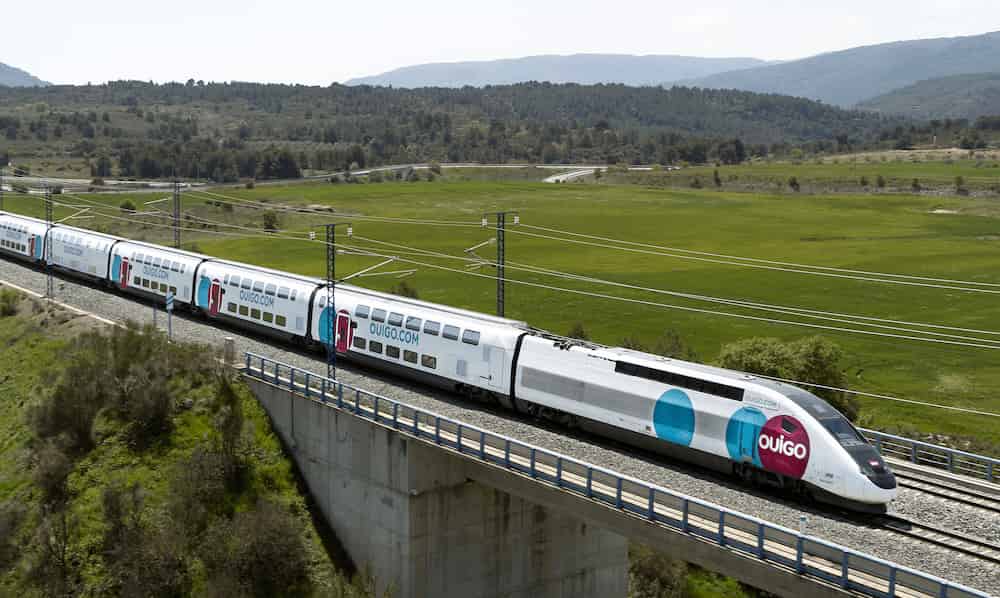
Hundreds of train passengers avoided harm on Christmas Eve after the train’s driver jumped from the cab. The train was left unmanned with more than 400 people onboard.

French national railway company SCNF said in a statement that the incident occurred on a high-speed line at approximately 8 p.m. on Christmas Eve in the Seine-et-Marne region to the east of Paris when a train driver died by suicide “while the train was moving. The entire railway family is in mourning and is very marked on this Christmas Day by this terrible tragedy,” SCNF added in the translated statement. 

The company said that the train was equipped with new technology called “Automatic Standby with Downforce Control,” which helped it avoided disaster. The system checks to ensure that there’s an “active” driver running the train “at all times.” The system kicked in during the incident and safely brought the train to a stop on the tracks.

The incident “severely disrupted” train traffic to the east of Paris as trains were “diverted by conventional lines in both directions.” This resulted in “longer travel times of around an hour and 30 minutes on average and longer delays for six TGV trains,” the SCNF statement said.

The train’s driver was identified by U.K. newspaper The Times as 52-year-old Bruno Rejony. French transport minister Philippe Tabarot said that he had been suffering from personal problems ahead of the incident and praised the train’s safeguard system for saving the travelers onboard at the time.

“The driver wished to end his life in a solitary action,” Tabarot said on CNews television, in The Times‘ story. “It could have been more serious if he had wanted to derail his train.” 

RTX’s Collins Aerospace Enables Disparate Network Communication to Expand Situational Awareness at Keen Sword

Collins Aerospace successfully demonstrated a new cross-domain networking capability to improve situational awareness for forces in the initial stages of a conflict. Collins enabled the relay of unclassified data from non-traditional sensors into a fires network in support of Marine Corps Command and Control objectives during exercise Keen Sword hosted by III Marine Expeditionary Force.

Non-traditional sensors including commercial nodes run on different networks than government systems, requiring data movement across machines to provide users an integrated view of key data. Collins automated the routing of data across different security classification levels and used satellite networks to provide a secure transport layer between the non-traditional sensors in a configuration that took less than an hour to set up and run.

“We must provide decision makers with the best information from any data source and rapidly reconfigure systems to support changing mission needs,” said Elaine Bitonti, vice president and general manager for the Connected Battlespace & Emerging Capabilities portfolio at Collins. “During the exercise, Collins enabled expeditionary machine to machine transfers of data to close decision chains quickly.”

Five Killed in Fuel Depot Explosion

An explosion at an ENI fuel depot located just north of Florence, Italy sent a large plume of smoke into the sky. Witnesses in the area reported a large bang and tremors. The blast happened on December 9 and caused the collapse of a building that housed offices, injuring 14 people, according to Eugenio Giani, Tuscany’s governor. Two of those were in critical condition.

Residents were initially advised to keep their windows closed, but environmental officials later determined that the air quality was safe. The smoke temporarily interrupted regional train services.

The cause of the blast in the town of Calenzano is under investigation. The flames were contained, which prevented the fire from spreading to storage tanks from the loading dock area where the explosion occurred.