
We tend to mark the development of aviation security countermeasures alongside the history of significant attacks. The traditional airport screening checkpoint emerged in response to the hijackings to and from Cuba in the 1960s; passenger profiling and sky marshal programs developed as a reaction to the Palestinian hijackings and attempted bombings of the late 1960s and 1970s; hold-baggage screening commenced in response to the bombing of Air India in 1985, and was speeded up following the loss of Pan Am 103 over Lockerbie in 1988; enhanced flight deck doors and broader prohibited items lists followed the 9/11 attacks; shoe inspections commenced after Richard Reid’s attempted bombing of an American Airlines flight in 2001; liquids, aerosols and gels became restricted following the liquid explosive plot of 2006; and body scanners were introduced in response to the attempted destruction of a Northwest flight by so-called “underwear bomber” Umar Farouk Abdulmutallab on Christmas Day 2009.

Although there have been other incidents over the last 16 years, none has resulted in a global change in the way in which we process passengers and inspect the items they carry, check-in or ship. Much of the international focus has been on the development of security culture, enhancing the capability of screening technologies and investment in countermeasures to respond to cyberattacks and the vulnerability of aircraft to drones. Traditional hijacking has not been at the forefront of our attention since 9/11 … and that was a quarter of a century ago.

Yet, on September 30, in a flashback to the attacks of the 20th century, flydubai flight FZ1073 was en route from Dubai to Tel Aviv when it became the latest landmark event in aviation security history.
From an Israeli perspective, it will go into the annals of incidents that helped the State develop its reputation as the gold standard in aviation security: the neutralizing of hijackers Leila Khaled and Patrick Argüello in 1970, the successful storming of a Sabena flight in Tel Aviv in 1972, the movie-inspiring Entebbe rescue mission carried out in Uganda in 1976, and the identification of Anne-Marie Murphy by profiling at London Heathrow ahead of an El Al flight to Tel Aviv in 1986.
What happened this September should surprise nobody. The fact that the flight, and all souls on board, survived should. Luck was certainly present in abundance, luck that was exploited by a number of heroes — from the Captain who managed to open the flight deck door, to the relief pilots who had to prevent the aircraft crashing, to the individuals amongst the passenger population who had the wherewithal to, without hesitation, overpower and restrain the co-pilot and then care for the injured Captain.
As with every incident, there are learning points.
Exactly one week prior to the attack, I had the honor of delivering a keynote address to the European Association for Aviation Psychology. The title of my presentation was “Trusted Access, Hidden Risk: Understanding the Insider Threat to Civil Aviation” and I focused my comments on my two primary concerns: the mental health of pilots and their potential to attempt to perpetrate acts of aircraft-assisted suicide, and secondly the impact of current geopolitical events on the behavior and actions of those who work within the aviation industry.
Suicidal Pilots
It is quite probable that, since 9/11, we have lost more lives within civil aviation as a result of pilot suicide than due to terrorism. (I can’t confirm that absolutely due to the number of inconclusive or absentee accident reports.) Pilot suicidality is a touchy subject, with pilots’ unions being very concerned about any attempt to undermine confidence in those whose task it is to fly aircraft. Exemplifying this, I have experienced resistance to my recommendation that flight attendants actively be encouraged to report any concerns that they might have regarding the behavior of pilots prior to departure. The retort is that faith in the technical crew is essential and that vexatious flight attendants might raise concerns which could end a pilot’s career as any report would have to be acted losing altitude upon.
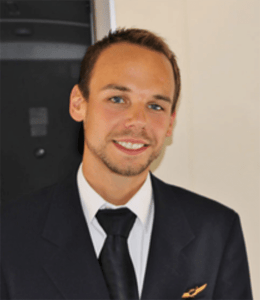
Yet the reality is that, within the ranks of pilots, there will — as with any profession — be those who are struggling with their mental health and who could pose a threat to themselves and to the lives of those they are entrusted to safely transport.

There are more than enough incidents over the last 30 years illustrating the catastrophic consequences of having a troubled pilot at the controls. In the 1990s, three aircraft were allegedly brought down in this manner — Capt. Younes Khayati on Royal Air Maroc (1994), Capt. Tsu Way Ming on Silkair (1997) and Gameel Al-Batouti on Egyptair (1999).
While the loss of Germanwings Flight 9525 as a result of Andreas Lubitz’s actions on March 24, 2015, is the incident most people remember, Capt. Herminio dos Santos Fernandes was responsible for crashing his LAM flight in Namibia, whilst en route from Mozambique to Angola, on November 28, 2013.
Many in the industry are convinced that aircraft-assisted suicide is behind the loss of Malaysia Airlines flight MH370 in 2014, China Eastern flight MU5735 on March 21, 2022, and, potentially, Air India flight AI171 last year. None of these are confirmed and it is possible that the crew of each of these flights could have been desperately trying to save their flights rather than cause their demise.
The list of losses by definition excludes the close shaves that we have also experienced when pilots had planned, or even attempted, to sabotage their own flights but were prevented from doing so by either circumstance or the actions of their fellow crewmembers. In 2010, Capt. Robert Brown had planned to crash his British Airways aircraft into Lagos, after having murdered his wife the day before. Capt. Clayton Osbon had to be coaxed out of the flight deck of a JetBlue flight operating a U.S. domestic route (in 2012) having had a breakdown. In August 2022, Jonathan J. Dunn was flying as a first officer and carrying a firearm as a licensed member of the Federal Flight Deck Officer program when he allegedly threatened to shoot the captain of their Delta flight following a disagreement over diverting the flight to take care of a passenger with a medical issue. And, on October 22, 2023, Joseph Emerson, seated in a cockpit jump seat on an Alaska Airlines flight, allegedly attempted to cut fuel to the plane’s engines mid-air.
The bottom line is that there is more than enough evidence to call into question the value of having a locked flight deck door which passengers and crew cannot open should a rogue pilot, or indeed a hijacker, be at the controls. Their deployment was a knee-jerk reaction to the events of September 11, 2001, and was understandably championed by pilots who could not consider that their own integrity might be called into question.
There can — and should be — a way of securing the flight deck, but there has to be an override system. In the event that a hijacker in the cabin tries to gain access to the flight deck, a delayed entry gives pilots time to prepare for a cockpit incursion and, more importantly, provides the passengers an opportunity to neutralize the hijacker before they gain access to the cockpit.
Luck on Board FZ1073
For all on board FZ1073, luck was on their side — even if that luck was created by the protagonists.
The harsh reality is that all souls on board would have been lost had the first officer, allegedly an Omani national named Hamam al-Hammami, killed Capt. Smit Machchhar with the cockpit’s crash axe as he had presumably intended. Clearly the Indian captain would not have been able to open the door. Equally, one supposes that al-Hammami may have hoped that the captain might have exited the flight deck to use the rest room or speak to the cabin crew during the flight and that, had he done so, there would have been no need for a physical attack on the captain at all — al-Hammami could’ve done exactly what Andreas Lubitz did on the Germanwings flight and simply locked the door, preventing all access from the cabin leaving him free to crash the aircraft without interference. As it happened, al-Hammami allegedly feigned the need to pray. Then, knelt behind the captain, he seized the opportunity to grab the cockpit crash axe and attack Capt. Machchhar.
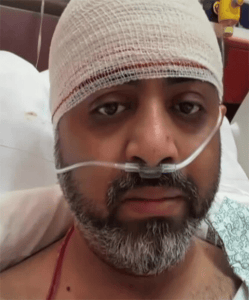
Perhaps unaware that he had failed to completely incapacitate Machchhar, al-Hammami turned his attention to flying the aircraft; the good fortune continued with Machchhar being able to summon the energy to, despite his horrific injuries, open the flight deck door. Initial reports indicate that the door opening was brief, but it was sufficient for him to scream for help.
The call was heard by Tali Manes, a female passenger who had taken her six-year-old daughter Nina to use the restroom just outside the cockpit. Manes initially heard noises that sounded like a struggle was taking place in the cockpit and she alerted the flight attendants. When Machchhar actually opened the door Manes saw al-Hammami stabbing the captain and now screamed for help. Both her screams and those of Machchhar were heard by at least one of the deadheading pilots scheduled to operate the return flight from Tel Aviv to Dubai seated towards the front of the cabin.
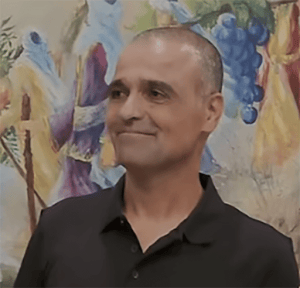
Whilst al-Hammami managed to close the door again, he did not succeed in locking it and one of the deadheading pilots managed to gain access to the cockpit. At the same time, four of the Israeli passengers who had also heard Manes’ screams rushed forward to help overpower al-Hammami, save Machchhar and protect the flight deck from any further incursion.
One of the four Israeli passengers, Yaniv Hayoun, had followed the first deadheading pilot into the cockpit, and climbed into one of the pilot’s seats. Hayun, whose real job was a plumber, later said that he often watched “Air Crash Investigation” documentaries and, as such, knew instinctively that he had to pull the yoke back. He remained at the controls until the second pilot made his way to the flight deck.

Although their names were initially not made public, the actions of Fijian pilot Henson Steven (who had previously flown for Fiji Airways) and South African pilot Rowan Tooth (who had flown for Airlink) were truly remarkable. Completely unprepared, and in the midst of a bloodbath, they had to jump into the cockpit seats of an aircraft which had plunged from approximately 34,000 feet to around 17,000 feet in less than a minute, before recovering control of the aircraft and successfully landing in Tabuk in Saudi Arabia.
Behavoral Inertia
The Israeli passengers who intervened performed the 2026 version of “Let’s Roll,” realizing that the aircraft was doomed if they did not act.
The “Let’s Roll” phrase, associated with the actions of those heroic passengers who tried, albeit unsuccessfully, to intervene on United Airlines flight 93 on 9/11 became one of the defining acts of heroism on a tragic day. The difference, it would seem, between 2001 and 2026 was that this time there was zero hesitation.
Behavioral scientist, Dr. Liraz Margalit, explains that “behavioral inertia” so often prevents people acting swiftly in such extreme situations. In her LinkedIn post on September 30, she explained that, “Dozens of studies have shown that tangible danger does not eliminate the habit of obeying and waiting for instructions. This phenomenon is called ‘behavioral inertia’ — at the moment of truth, a person has to overcome a mental barrier — ‘Who am I to even jump in?’

Margalit argues that, “The average Israeli does not wait for ‘approval’ from an authority holder to act if he understands that something is wrong. If the cockpit’s door needs to be broken into, he won’t wait for a microphone [sic] message from the head of the flight attendants. In Israeli culture this is called low power distance. There is a suspicious attitude towards authority — the title of the person in front of us will not necessarily make us silent.”

In a blend of light-hearted observation and cold analysis, Margalit describes her fellow Israelis as, “He always has something to say, he argues with those who are responsible, gets involved in other people’s affairs and is convinced that he has a better offer. Israeli chutzpah is a two-sided coin. Its everyday side can be annoying, loud, and disruptive to public order; but the other side of it is improvisation, resourcefulness, and especially the refusal to be a passive victim waiting for evacuation orders while the ship sinks. We like to complain about Israeli chutzpah. And then there comes a moment when you want exactly this Israeli next to you.”

That final line became evident in the numerous memes that surfaced following the FZ1073 incident.
I acknowledge that there has been no official report detailing the precise sequence of actions on the flydubai flight and that I am relying on media reports by sources considered reliable in both the United Arab Emirates and Israel. Even if not completely accurate — and we know that individual recollections will vary — I still believe that the evidence is compelling. We must rethink the impregnable cockpit door deployment. There will be more suicidal pilots — either those experiencing poor mental health or those who, like al-Hammami, have become radicalized — and we cannot place our faith in the abundance of luck that those on FZ1073 benefited from.
Background Checks
How Hamam al-Hammami came to be on the flight deck of FZ1073 in the first place has rightly generated considerable concern.
Reports indicate that, although his father was Omani (and his mother was Syrian), he had actually been born in the United Arab Emirates and lived there for quite a few years as a child. He studied overseas, including in Australia from 2015 to 2017 and shorter stints in both the United Kingdom and New Zealand. It appears that it was while he was in Australia that he became radicalized and was inspired by the 9/11 attacks. The Emirates News Agency WAM reported that, al-Hammami “admitted that, while studying in Melbourne, Australia, he regularly attended a mosque affiliated with the Royal Melbourne Institute of Technology. Through these visits, he became acquainted with individuals associated with a centre known as ‘My Centre.’ He stated that the center was managed by a Lebanese man known as ‘Abu Hamza’ and allegedly received support from an association linked to the Muslim Brotherhood.”
Between 2020 and 2023, al-Hammami successfully studied for a degree in aviation management with Buckinghamshire New University in the U.K.; the course was a distance-learning program.
His airline career commenced with Oman Air where he was initially enrolled on their pilot training program. His behavior, however, generated concerns amongst his peers and he found himself restricted to ground operations. He remained with the carrier until February 2025, when he sought employment overseas in order to realize his goal of, according to the WAM report, “carrying out a premeditated terrorist plot to seize control of the aircraft and use it to launch a suicide attack targeting the passenger terminal at Ben Gurion Airport in Tel Aviv.”
Initially he secured employment with Royal Air Maroc. It’s unclear whether he thought that, given that Morocco was a signatory to the Abraham Accords, the national carrier might operate direct flights to Israel; they do not. Yet his time with Royal Air Maroc was short-lived; whilst he completed their flight training program, they did not offer him a position as a pilot. Some reports indicate that al-Hammami was reportedly arrested while in Morocco, but the reasons and details are unclear.
In January 2026, al-Hammami was recruited by flydubai. The carrier operates regular flights to and from Tel Aviv, affording al-Hammami the opportunity to realize his long-held 9/11-style ambitions. According to the WAM report, “he had prepared himself both psychologically and physically to carry out the plot by intensifying his exposure to material promoting terrorism and training in boxing under a private coach.”
The 30 September flight was not the first time he had flown the route. His first flight was very much an act of hostile reconnaissance, learning both the nature of communication with Israeli air traffic control and visualizing his intended target — Ben Gurion International Airport. On his second flight to Tel Aviv, he was rostered alongside a female captain and — whilst again reports are vague — the speculation is that he did not feel prepared to physically attack the woman to achieve his goals.
On September 30, 2026, a week ahead of the anniversary of the October 7 Hamas attacks, he clearly felt the time was right.
External observers will question how a pilot who had been deemed, in Oman, to have become radicalized, could end up with a job as a pilot at all. However, as with all background checks, HR reporting — especially cross-border — is notoriously scant in detailing concerns. Often a report will only cite periods of employment and reference disciplinary procedures; queries about his religious observance might well not have been transmitted to either Royal Air Maroc or to flydubai. It will, in due course, be interesting to hear what al-Hammami’s fellow pilots at flydubai thought of him and whether any concerns about his extremist views had been reported.
There are Israeli restrictions on who may serve as crew on flights to and from Israel; any crewmember assigned to such flights must hold a passport from a state that maintains diplomatic relations with Israel. That would have meant that al-Hammami should not have been rostered to the flight at all by flydubai — who would be very familiar with the ruling — as the holder of an Omani passport.
Israel confirmed that the names of all passengers and crew would have been known to them before the flight had taken off, so questions must be asked as to why the Israelis did not flag al-Hammami as a concern. The Israeli Ministry for Transportation is the body responsible for conducting such checks — potentially ordering a foreign carrier not to depart or ordering it to divert whilst en route — but it emerged that the name checks were solely conducted on the passenger lists. Again, the crew were trusted.
The Geopolitical Context
Whilst Israel’s reputation for aviation security might still be deemed the gold standard, its current standing in the world is at an all-time low. The war in Gaza, and the resultant death toll, has caused global outrage. I am not going to delve into the rights and wrongs of the conflict here. That said, it is clear that there are many people working within the aviation industry around the globe who may have strongly-held beliefs.
In the three years since the Hamas terrorist attacks on Israel on October 7, 2023, there have been many expressions of both anti-Israel and antisemitic sentiment by industry employees.
Catering personnel have tampered with kosher meals. “Free Palestine” [sic] was written on such meals served on an Iberia, en route from Buenos Aires to Madrid in August 2025. And, the word “ZIONAZI” was found scrawled on a kosher meal on a jetBlue flight.
This year, an El Al flight had to depart Los Angeles without quite a lot of the luggage after it appeared that a baggage handler had affixed “Free Palestine” labels to 140 suitcases destined for the flight.
Air traffic controllers have been reported for making unprofessional comments to El Al pilots, most notably on a flight departing Paris on August 11, 2025, whilst there have been a number of incidents of spoof air traffic control communication directing El Al flights to divert from their intended route.
And crew members have made their political views known by wearing Palestinian badges on their uniforms.
Of course, it’s a far cry from legitimate acts of protest — or even unsanctioned political expression — to carrying out a terrorist act. I am not suggesting that any of the caterers, baggage handlers, air traffic controllers or cabin crew who carried out these acts would ever endanger aviation. But it only takes one!
Reporting concerns we might have about our fellow employees in a timely fashion is a significant element of the antidote. We cannot rely on luck. Yes, passengers can be essential elements of the aviation security system, as long as we don’t make it impossible for them to act. And, for sure, almost all aircrew would have acted with similar courage to Capt. Smit Machchhar, Henson Steven and Rowan Tooth. But aviation security is about finding needles in haystacks.