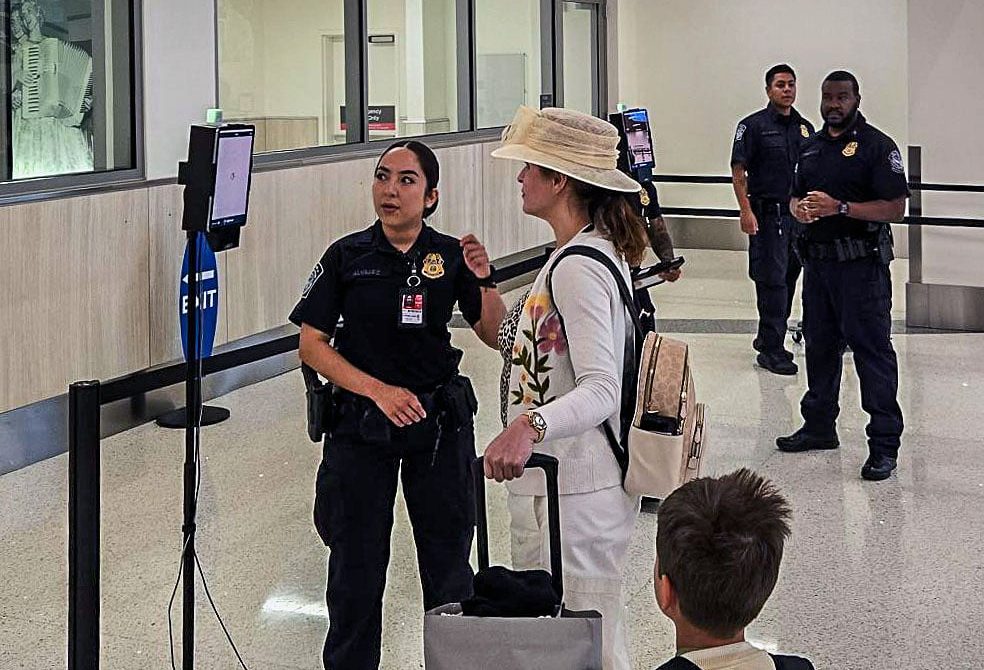
As North American airports race to modernize border processing, Miami International Airport (MIA) today introduced U.S. Customs and Border (CBP) Protection’s Enhanced Passenger Processing (EPP), which leverages SITA Smart Path technology to deliver faster and more secure arrivals for U.S. citizens. MIA, in collaboration with CBP, is one of several U.S. airports to go live with EPP this year and is home to CBP’s largest single deployment of EPP.
“Offering EPP for our travelers is part of our commitment to making MIA one of the most technologically advanced and passenger-friendly airports in the country,” said Miami-Dade County Mayor Daniella Levine Cava. “Because participation in EPP is completely voluntary, travelers may choose the option that works best for them — while still benefiting from improved security and a smoother, more efficient arrival process. It’s all about enhancing the overall experience for the millions of visitors who arrive in Miami-Dade County from around the world every year.”
At MIA, CBP’s EPP initiative leverages SITA’s Smart Path platform to capture and process biometric photos during inspection, verifying travelers by matching images against CBP’s records within three seconds. This automation reduces wait times while upholding the highest security standards. At MIA, the process involves 12 biometric face pods across MIA’s three passport control facilities, located in concourses D, E, and J, making it CBP’s largest single EPP deployment to date. MIA’s broader digital transformation strategy may include future expansion.
“CBP is actively expanding biometric processing at major U.S. ports of entry to enhance security and streamline the arrival process for travelers,” said Daniel Alonso, Senior Official Performing the Duties of the Director at Customs and Border Protection. “Collaborations like the one at MIA are essential for ensuring secure and efficient borders while delivering a seamless experience for international travelers.”
The mobile wireless-enabled pods can be repositioned as passenger flow changes, helping CBP optimize staffing and throughput. Each unit is equipped with agent-facing screens for real-time monitoring, ensuring that the technology enhances both passenger experience and officer oversight.
Digital transformation is accelerating across North America
According to SITA’s latest Air Transport IT Insights, 53% of North American airlines are already investing in biometric and digital identity management, outpacing the global average. Meanwhile, nearly 60% of airports have implemented touchless passenger flow technologies, indicating that the region is at the forefront of aviation’s digital transformation.
“Miami is one of America’s busiest international gateways and the door to Latin America and beyond,” said Shawn Gregor, President Americas at SITA. “This EPP launch is setting a new standard for efficiency at the border by using biometrics to make arrivals smoother, faster, and more secure for everyone, and can easily scale over time to additional terminals and to handle increased capacity.”
The introduction of EPP at MIA directly supports this trend, enabling more efficient processing without the need for new infrastructure, and demonstrating how biometrics and mobile connectivity can help alleviate congestion as passenger volumes increase.