Two Bomb Threats in 24 Hours

A pair of bomb threats within 24 hours — one targeting a United Airlines flight and another at New York’s LaGuardia Airport — has renewed concerns about aviation safety.

United Airlines Flight 512 departed George Bush Intercontinental Airport in Houston on Tuesday morning and landed safely around 10:30 a.m. at Ronald Reagan Washington National Airport. Shortly after landing, officials reported a bomb threat against the aircraft. A caller allegedly threatened that the United flight would explode unless Reagan National Airport air traffic controllers pay $500K in crypto.

Emergency crews quickly surrounded the plane as staircase trucks arrived to assist passengers in deplaning. Travelers were taken by bus to the terminal while law enforcement conducted a full search of the jet. No explosives or suspicious items were found, and federal authorities later cleared the aircraft.

“The FAA is aware of a reported security issue on an aircraft at Reagan Washington National Airport (DCA),” the agency said in a statement. The Metropolitan Washington Airports Authority police, FBI Washington Field Office, and “multiple [other] law enforcement partners” are investigating the alleged threat, according to the airport.

Air traffic control recordings captured the tense moment the crew was alerted: “We have an unconfirmed bomb report for your flight, and we’ve got to get you away from the airport.”

Passenger Solange Rivera recalled the confusion on board: “We thought there was a bomb in the airport. Then they told us our airplane was the threat — that’s why there were police all around us.”

Just hours earlier, a Delta flight at LaGuardia had also been evacuated following a separate bomb threat — marking two airline security scares in a single day.

Meanwhile, back in Houston, long TSA PreCheck lines formed around 7 a.m. at Bush Airport, with staffing shortages tied to the ongoing government shutdown contributing to nationwide flight delays.

Transportation Secretary Sean Duffy said the delays are part of efforts to maintain safety during the shutdown but warned the situation could deteriorate further. “You will see mass chaos — mass flight delays, cancellations, and possibly closures of parts of the airspace — because we simply don’t have enough air traffic controllers,” Duffy cautioned.

Press Release

Celebrating Five Years of Antarctica Operations

For the fifth consecutive year, Hi Fly has returned to the White Continent, marking a significant milestone in its pioneering Antarctica operations.

The 2025 season, running from November through February, commemorates five years since the airline’s historic 2021 flight, when the first-ever Airbus A340 landed on Antarctica.

The A340-300 registered 9H-SUN operated the season’s inaugural flight for client White Desert Antarctica, connecting Cape Town, South Africa, to Wolf’s Fang Runway and back. The experienced crew, with Commander Carlos Mirpuri, Vice-Chairman of Hi Fly, at the controls once again, continues a tradition of excellence, precision, and adventure that began with the inaugural mission.

This year’s anniversary flight featured a special commemorative moment on site, as the crew posed with a plaque proudly inscribed: “Celebrating 5 Years in Antarctica”, honoring half a decade of successful operations in one of the most remote and challenging environments on Earth.

The journey covered an impressive 2,500 nautical miles each way, with a flight time of just over five hours. The Airbus A340 remains the largest commercial airliner ever to operate in Antarctica, a record underscoring Hi Fly’s capability and commitment to innovation.

Reflecting on the milestone, Commander Mirpuri said: “Each year we return to Antarctica, we are reminded of the uniqueness of this mission, where precision flying, teamwork, and respect for the environment all come together. Reaching the five-year mark is a proud achievement for Hi Fly and a testament to the dedication of everyone involved.”

Hi Fly’s Antarctica operations continue to demonstrate the company’s expertise in complex and demanding missions, reinforcing its standing as a global leader in wet lease and charter aviation.

Hi Fly is a leading widebody aircraft wet lease and charter specialist, offering worldwide services to airlines, governments, tour operators, companies, and individuals. Operating an all-Airbus fleet with a strong focus on safety, reliability, and sustainability, Hi Fly is renowned for its expertise in special operations, humanitarian missions, and pioneering flights to some of the most challenging and remote locations on Earth, including its groundbreaking Antarctic operations.

Captain´s Log

With 81 tons of fuel on board and 15 tons of payload, A340 9H-SUN performed the first mission of Hi Fly’s 5th Antarctica season for White Desert. Under the command of Carlos Mirpuri and his outstanding crew, the A340 delivered once again.

As the sun sets on this amazing aircraft, missions like this stand as a testament to its capabilities. It has served us well and has been the source of many joyful moments. 9H-SUN is the last A340 in our fleet and will soon be replaced by equally capable but more efficient aircraft.

This first landing took place at 1 a.m. local time, with the sun skimming the horizon and katabatic southeasterly winds of up to 25 knots making the temperature of minus 16 degrees Celsius feel much lower. A rotation time of 1 hour and 45 minutes shows how prepared the ground teams are down at Wolf’s Fang Runway. The flight to the Ice lasted 5 hours and 45 minutes, and the return flight 5 hours.

Captain Mirpuri emphasized that “without dream teams like the ones we have, none of this would be possible. That includes not only our flight crews, cabin crews, engineers, and ground coordinators, but also all those back in the office whose work is often unseen yet just as important as any other. A can-do attitude is in our DNA.”

A special thank you to the White Desert team — they do a tremendous job making these missions possible, and we deeply appreciate their trust in us and their continued partnership.

Press Release

German Federal Police Technology Center Certifies Smiths Detection’s Proprietary iCMORE Automated Prohibited Items Detection System

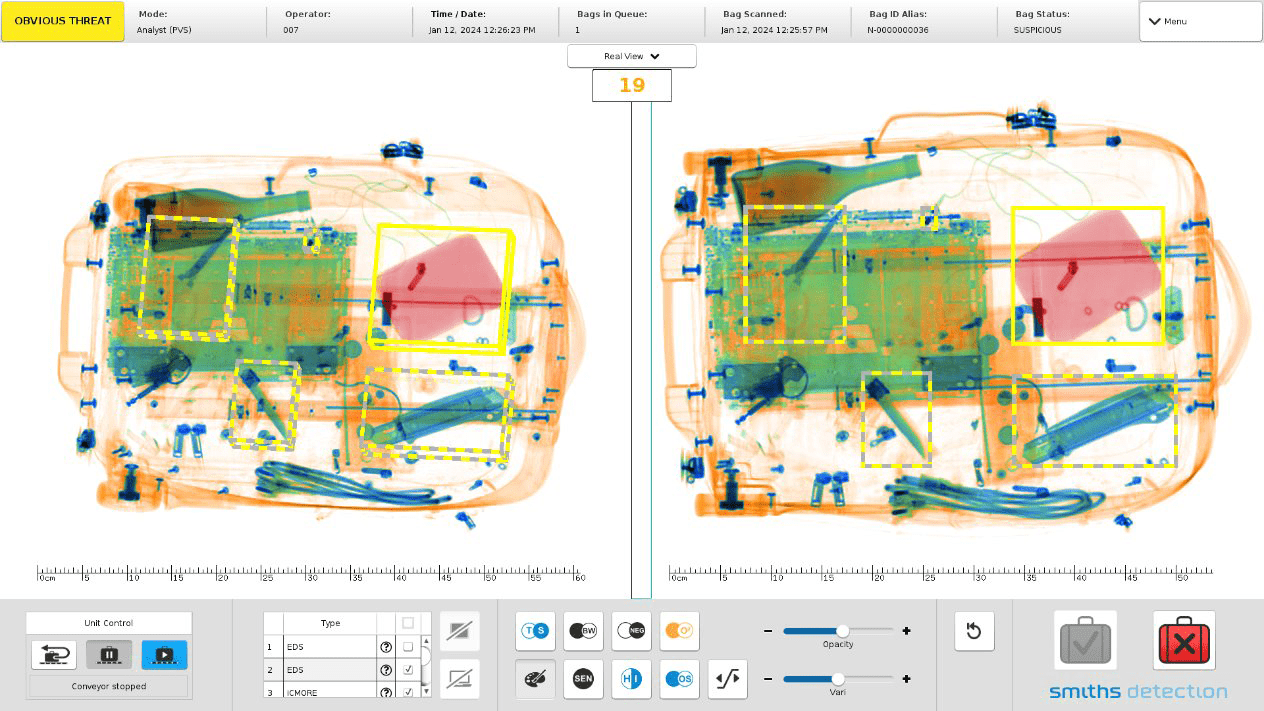
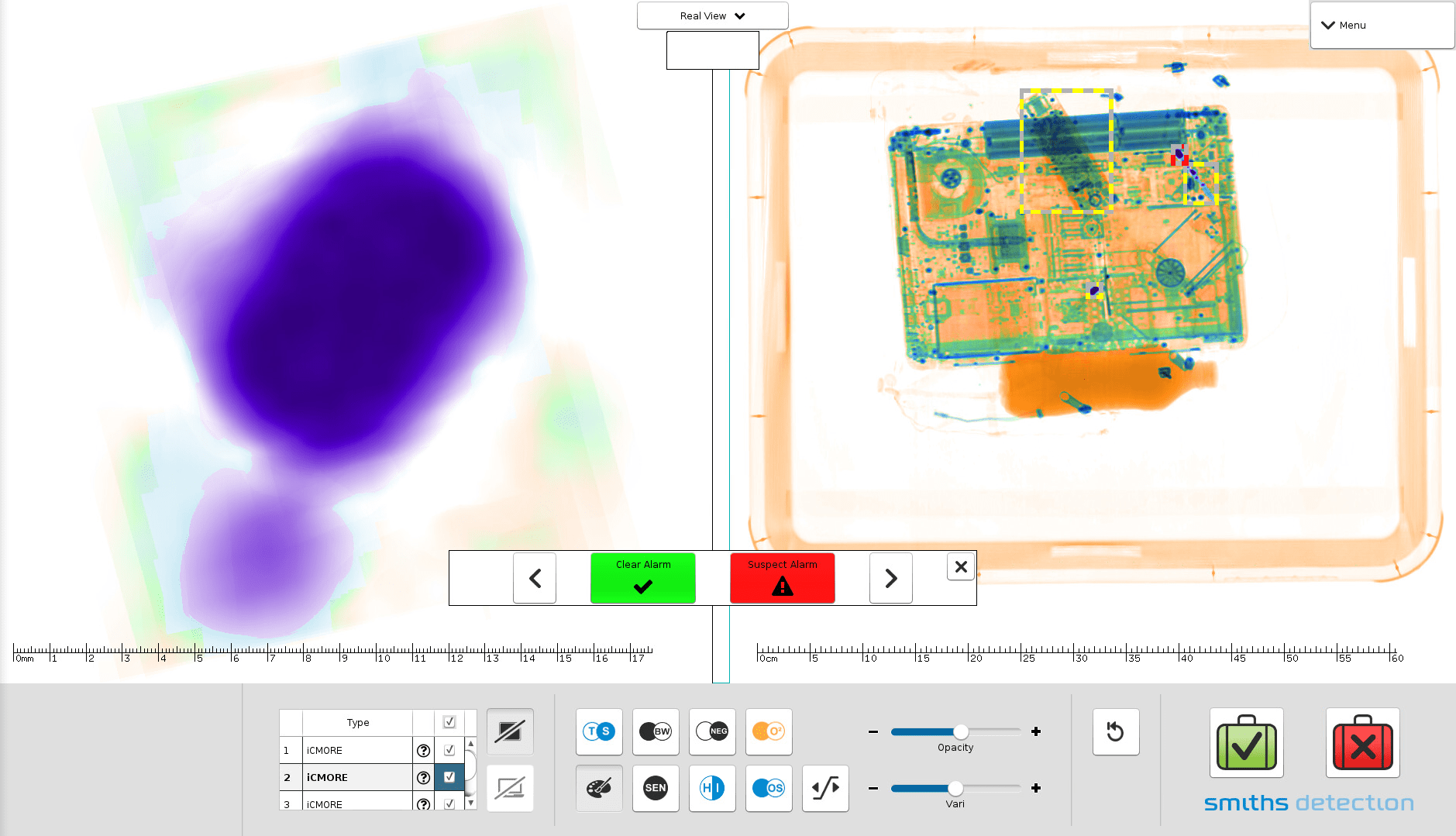
Smiths Detection, a global leader in threat detection and security screening technologies and a business of Smiths Group, announced that its proprietary iCMORE Automated Prohibited Items Detection System (APIDS) has been certified by the German Federal Police Technology Centre (FPTC) for use at airport security checkpoints in Germany.

iCMORE APIDS leverages AI in image analysis to identify a wide range of prohibited items on computed tomography (CT) screening systems with proven accuracy and reliability, at pace. Real time alerts give operators invaluable support, enable faster decisions and safely raise throughput for a more seamless passenger experience.

Certification from the German FPTC marks a clear step toward the ambition of alarm only viewing with iCMORE APIDS. The iCMORE algorithm was tested against EU APIDS Standard 1 alongside additional national requirements. Coverage applies to HI-SCAN 6040 CTiX in the certified configuration, and Smiths Detection will work with customers to align versions, schedule updates and deploy within the approved scope.

“This certification is another forward step for aviation security, operational efficiency and the passenger experience,” said Cymoril Métivier, global digital portfolio director at Smiths Detection. “With iCMORE APIDS delivering proven results on CT, passengers will know with certainty that they are protected with world leading precision while airport operators gain a transformational uplift in efficiency. Smiths Detection is leading this shift, enabling our customers’ security policy and paving the way for the future of airport security and alarm only viewing.”

Press Release

Smiths Detection Delivers Thailand’s First CT Checkpoint Systems to Airports of Thailand

Smiths Detection announced the sale of three advanced HI-SCAN 6040 CTiX — Computed Tomography (CT) checkpoint scanners to Airports of Thailand (AOT) — marking the first deployment of its kind in the country.

Smiths says the installation of the HI-SCAN 6040 CTiX systems represents a significant step forward in passenger screening technology at Thailand’s airports. These CT checkpoint scanners use the same advanced imaging technology found in medical CT scanners to generate high-resolution 3D images of carry-on luggage. This allows for automatic detection of explosives and other threats, improving both security and operational efficiency.

The systems will enhance the passenger experience by eliminating the need to remove electronics and liquids from bags, enabling faster checkpoint throughput and reducing queues.

“We are honored to partner with Airports of Thailand to bring CT checkpoint technology to Thai airports for the first time,” said Matt Clark, VP Commercial, at Smiths Detection. “This milestone reflects our shared commitment to innovation, safety, and enhancing the passenger journey.”

Aeroporti di Roma Transforms Passenger Experience with AI Virtual Assistant Powered by Amazon Web Services and Storm Reply

Aeroporti di Roma (ADR) announces the launch of Virtual Assistant, an advanced AI-powered digital companion designed to enhance the travel experience for the millions of passengers who pass through Rome Fiumicino Airport each year, recently confirmed by ACI Europe as the Best Airport in Europe for the seventh time.

Developed in collaboration with Amazon Web Services (AWS) and Storm Reply, this cutting-edge solution addresses travelers’ most pressing needs by delivering real-time information and support.
The Virtual Assistant offers passengers quick and easy access to essential travel information, accompanying them throughout their entire airport experience. Available through ADR’s WhatsApp Chatbot and the official website, the new digital tool—featuring ADRYX, the official mascot of Aeroporti di Roma—keeps travelers informed at every stage of their journey, providing real-time flight updates, guidance on airport services, and personalized recommendations for a pleasant and seamless experience inside the terminals.

“From the first ‘Buongiorno’ to the final ‘Arrivederci’, we are committed to offering a smooth travel experience that blends Italian hospitality with technological innovation,” said Emanuele Calà, Senior Vice President Transformation & Technology at Aeroporti di Roma. “The Virtual Assistant marks a significant milestone in our digital transformation journey, enabling us to provide personalized support to the roughly 50 million travelers who pass through our airports each year, ensuring that their first and last moments in contact with the city are comfortable and effortless.”

The solution was developed with the expertise of the AWS Generative AI Innovation Center and Storm Reply, an AWS Premier Consulting Partner, which supported ADR in leveraging the power of generative AI to create a responsive and intuitive virtual assistant capable of understanding and responding to complex passenger queries in multiple languages. Powered by Amazon Bedrock — AWS’s fully managed service for foundation models — and a multi-agent architecture, ADR’s Virtual Assistant delivers secure, high-quality AI-driven responses while maintaining the strict data privacy standards essential for airport operations.

“The AI-powered Assistant is a distinctive example of how artificial intelligence can seamlessly integrate into users’ everyday experiences, providing powerful yet discreet contextual support to travelers,” said Filippo Rizzante, Chief Technology Officer at Reply. “By combining multi-agent orchestration with AWS generative AI services, we enabled the Assistant to securely and efficiently manage complex real-time queries across multiple languages and contexts. Thanks to ADR’s innovative spirit, the AI-powered Assistant now enhances both operational efficiency and the passenger experience at a global high-traffic hub like Fiumicino.”

“The travel industry is undergoing a revolution driven by artificial intelligence and cloud technologies,” said Julien Groues, VP AWS France and Europe South. “Aeroporti di Roma’s Virtual Assistant demonstrates how generative AI can meaningfully transform passenger experiences. By combining ADR’s deep understanding of traveler needs with AWS’s advanced AI capabilities and Storm Reply’s implementation expertise, we have created a solution that makes navigating one of Europe’s busiest airport systems simpler and more enjoyable.”

The main features of the Virtual Assistant, which interacts naturally with ADR passengers through text or voice messages, include:

  • Parking availability: Travelers can check where to park their car at the airport.
  • Transportation services: Information about buses, taxis, and trains to and from the airport.
  • Terminal services recommendations: Restaurants, shops, shopping centers, and more.
  • Baggage tracking: Accurate information on baggage claim points and baggage status.
  • Connection assistance: Personalized guidance for passengers with connecting flights.
  • Multilingual support: Communication in multiple languages to serve Rome’s diverse international travelers.

The Virtual Assistant is now available to all passengers traveling for all the flights to and from Rome Fiumicino airport, with additional features planned for rollout in the coming months.

Signicat Joins New EU Digital Identity Wallet Pilot Aptitude to Help Create a Seamless Travel Experience Across Europe

 Signicat, the pan-European digital identity company, today announces its participation in Aptitude, one of the European Commission’s new Large-Scale Pilots (LSPs) for the European Digital Identity Wallet (EUDIW). Aptitude officially launched this week and will run for two years, testing real-world use cases of the EUDI Wallet across payments, mobility and cross-border travel.

In addition to Aptitude, Signicat is also contributing to WE BUILD, another LSP already underway, further reinforcing its role in shaping Europe’s digital identity ecosystem.

The Aptitude consortium brings together more than 110 organizations from over 15 European countries, including public administrations, service providers, and industry leaders. The project aims to advance interoperability, usability and privacy for European citizens using digital wallets in everyday cross-border scenarios.

Signicat joins Aptitude following its acquisition of Inverid in July 2025. Inverid, known for its identity verification technology ReadID, was originally selected as a participant in the Aptitude consortium. Following the acquisition, Signicat now continues that role, bringing its extensive expertise in digital identity and EUDI wallets, with its participation in WE BUILD, launched early this year, and in the previous round of Large Scale Pilors (EWC and NOBID).

Enabling seamless, privacy-first travel

Within Aptitude, Signicat will focus on the travel domain, exploring how a passport-based and reusable digital travel credential can simplify and secure travel experiences across Member States. This includes how citizens can use a single credential to identify themselves when booking flights, hotels, car rentals, train journeys or even cruise ships, while maintaining full control and privacy over the personal data they choose and need to share.

Building on internal R&D and previous pilots like EWC, Aptitude seeks to move beyond single-use digital travel credentials toward reusable, privacy-preserving and user-friendly identity solutions. The project will align with international standards such as the ICAO Digital Travel Credential (DTC) and ISO PhotoID, and will contribute feedback to the European Digital Identity Toolbox, which guides Member States in wallet implementation.

“With Aptitude, we are taking another major step towards making digital travel a reality in Europe by ingesting NFC-verified and passport-based attestations into European digital identity wallets” said Bob Hulsebosch, Compliance Officer at Signicat. “Building on what we built in earlier pilots, our focus now is to make it a reality that citizens enjoy a seamless and privacy-friendly experience when using their European Digital Identity Wallet across borders. We are proud to bring our expertise into this important European initiative.”

Driving the future of digital identity in Europe

Aptitude will conclude after a two-year period, aligning with the timeline by which EU Member States must deploy their national EUDI wallets under Regulation (EU) 2024/1183, which amends eIDAS.

Signicat’s participation reinforces its commitment to supporting the secure, interoperable and user-centric rollout of the European Digital Identity Wallet – empowering citizens to prove who they are safely and effortlessly across Europe and supporting Member States in creating that new identity eco-system.

Industry News

Most Airline Costs Are Still Managed by Hand, SITA Launches AeroCost Manager to Help

Controlling costs is key in any industry. But while the direct price of operating aircraft, with multiple partners, represents more than half of airline expenditure, many accounting systems are still hamstrung by inefficient manual components. Manual processes that are open to error, and worse, intentional third-party fraud.  

To address this issue, SITA has launched AeroCost Manager, a new purpose-built Direct Operating Cost (DOC) accounting solution that delivers real-time cost management and invoice control for every dollar of aircraft expenditure. Developed with the market-leading Maureva KEOPS system, the system centralizes and integrates an airline’s cost controls by validating invoices, while also automatically detecting any overcharging. 

“Keeping on top of costs in the aviation industry isn’t easy, and yet it’s essential for managing the financial success of operations and future route planning. But most direct operating costs are still handled manually and aren’t centralized. That’s not only ineffective for budget control but also opens up an airline to inefficiencies and worse, to third-party fraud,”explained Martin Smillie, senior vice president, communications and data exchange, SITA. “SITA AeroCost Manager is a purpose-built and game-changing accounting system for airlines to control their operating costs effectively. It is an accounting solution that maximizes and adds profitability to an airline’s financial bottom line.” 

Jean-Marc Perreaux, sales director for Maureva added: “SITA AeroCost Manager integrates our KEOPS solution to automate and enhance airline decision-making and financial stability. It centralizes data and continuously monitors costs. Without compromising on functionality and compliance, this system provides accurate calculations for everything from network and route planning to flight operations, post-flight costs and overall budgeting.”

SITA AeroCost Manager validates every expenditure of an aircraft operation – from expensive jet fuel that represents 30%-plus of any flight, to airport ground handling and associated charges, navigation and overflight fees, take-off and landing charges, and costs from crew transfers and accommodation. 

With built-in IATA SIS (simplified invoicing and settlement) regulatory protocols, SITA AeroCost Manager can integrate accounting from 1000-plus suppliers to help finance and network planning teams build accurate budgets and assess route profitability on an on-going basis. It also models complex service agreements in real-time operations for automatic updates, calculating provisional costs based on current operational data. And the system automatically detects overcharging and flags discrepancies, generating claims and credit notes.

“Without centralized, automated control of invoice management, it becomes a cost center and not a control point, with weak invoice checks,” Smillie added. “For airlines with a fleet of 50 aircraft, accounting teams will deal with 25-30,000 invoices every year. Manual processing generates simple errors, while fraudulent activity can also add unwarranted cost. SITA AeroCost Manager resolves these issues with a centralized, intelligent invoice management solution that reduces costs through automation, removing innocent human error and intentional third-party fraud.”

L3Harris and Shield AI Demonstrate AI-Powered System to Defeat Unmanned Threats

L3Harris Technologies and Shield AI successfully demonstrated an artificial intelligence-enabled drone detection system during the Department of War’s recent Technology Readiness Experimentation event.

This test event showed the system can more quickly detect hostile drones at longer ranges than current systems, even if the drones are partially obscured by buildings or clouds. L3Harris tested the passive capabilities using WESCAM MX-Series electro-optical/infrared sensors integrated with Shield AI’s Tracker counter-UAS software to detect multiple classes of unmanned aerial systems. 

“Our warfighters and allies are facing a new breed of unmanned threats that require faster responses at greater ranges without being detected themselves,” said Tom Kirkland, vice president and general manager, targeting and sensor systems, L3Harris. “Partnering with Shield AI enables combat-proven targeting systems like the WESCAM MX-Series to be more effective and provide added protection to operators.” 

“Adversaries are fielding more drones, cheaper and in more complex environments than ever before,” said Christian Gutierrez, vice president, Hivemind Solutions, Shield AI. “Defeating that threat requires technology that is intelligent, adaptable and passive, and this collaboration with L3Harris brings together the strengths of autonomy and sensing to meet that urgent operational need.”

The next phase of this collaboration will include fine-tuning different airborne object behavior models to enhance performance tracking across air, land and maritime domains during daytime and nighttime operations. The AI-powered capability will be integrated with the L3Harris VAMPIRE Counter-Unmanned System designed to defend against small drones.

The Republic of Korea Selects L3Harris for Airborne Early Warning and Control Aircraft Program

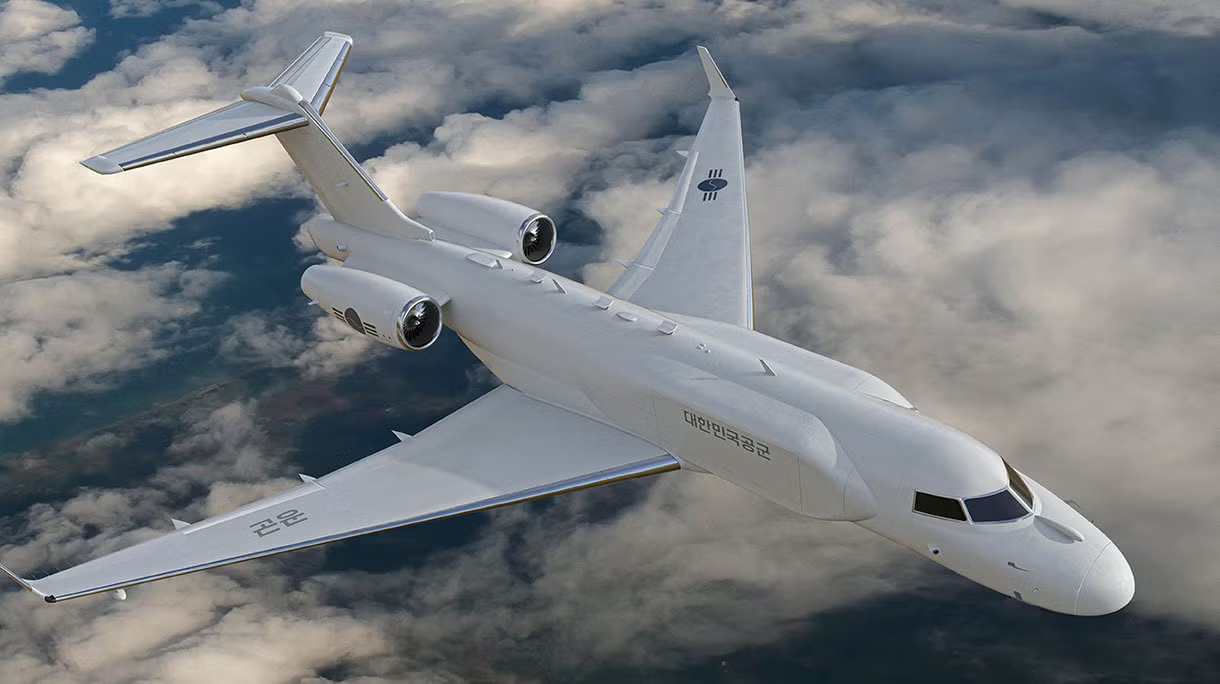
L3Harris Technologies has received a contract to deliver modified Bombardier Global 6500 airborne early warning and control (AEW&C) aircraft to the Republic of Korea Air Force. L3Harris is partnering with Bombardier, Israel Aerospace Industries’ ELTA Systems and Korean Air to provide this advanced capability. The program is valued at more than $2.26 billion.

These aircraft will fly faster and operate longer to improve the nation’s mission readiness. They will also cruise at higher altitudes for improved safety and provide combat-proven radar coverage to more quickly detect and track threats. The communications suite will provide interoperability with the United States, NATO and coalition partners, creating a networked battlespace with fifth-generation aircraft and beyond.

“L3Harris is ready to deliver an advanced aircraft fleet that will strengthen mission effectiveness for a key American ally in the Indo-Pacific region,” said Christopher Kubasik, chair and CEO, L3Harris. “We look forward to collaborating with the Republic of Korea to develop, test, integrate and sustain this vital capability for years to come.”

“We are extremely pleased that the Bombardier Global 6500 will help the Republic of Korea Air Force defend its borders with L3Harris’ solution,” said Éric Martel, president and CEO, Bombardier. “Amid rising geopolitical tensions, this aircraft is the go-to choice for governments seeking to modernize their capabilities, with the reliability and performance to support the most demanding missions.”

“This team brings together world-class, field-proven capabilities to deliver an AEW&C solution for the Republic of Korea,” said Boaz Levy, president and CEO, IAI. “Our team’s strategic special mission aircraft integrates innovative solutions and proven expertise, such as sensor miniaturization and advanced AESA radar technology, coupled with advanced detection and classification capabilities that enable success even in the most challenging missions.”

“Throughout this collaboration, Korean Air will strengthen its capabilities in modification, integration and maintenance for the latest special mission aircraft,” said Jin Kyu Lim, head of aerospace division, Korean Air. “As a leader in the domestic aerospace industry, we are committed to building a robust special mission aircraft sector and contributing to the nation’s defense capabilities.”

In addition to supporting aircraft deliveries, Korean industry will take the lead in operating and maintaining the program, including meeting any future manufacturing requirements.

Man Arrested at Atlanta Hartsfield-Jackson Airport

A man is facing charges after he went to the Atlanta Hartsfield-Jackson International Airport on Monday, October 20 to “shoot it up.” Billy Joe Cagle, 49, was arrested at airport. Cagle, who is from nearby Cartersville, was reported as a threat to the airport to the Atlanta Police Department.

Cagle’s family called Cartersville police and warned them that he was heading to the airport and was threatening to shoot. His family also told police that he had been livestreaming on social media before he got into the airportaround 9:30 a.m.

Atlanta Police Chief Darin Schierbaum said Cagle was not armed when he entered the airport, however an AR-15 assault rifle was found in a pickup truck parked outside the airport.

Schierbaum said he believes Cagle was inside the airport initially to check out the layout. The police chief also said he believes Cagle was going to head back to his truck and was “likely to use that weapon in the crowded terminal he had just seen.” Law enforcement found Cagle inside the airport around 9:42 a.m. and was taken into custody shortly after, reports say.

Secretary of U.S. Department of Homeland Security Kristi Noem said in a social media post that she is “thankful this individual was taken into custody by law enforcement before harming anyone.”

Cagle was charged with terroristic threats, criminal attempt to commit aggravated assault and possession of a firearm by a convicted felon.