Disruptions to global shipping routes and regional airspace closures are beginning to strain food supply chains across the Middle East, raising concerns about rising prices and potential shortages if the situation persists.
Much of the region—particularly Gulf states such as the United Arab Emirates, Qatar, and Kuwait—relies heavily on imported food, with some countries bringing in as much as 80–90 percent of their supplies. The current conflict has disrupted maritime traffic through the Strait of Hormuz, one of the world’s most important shipping chokepoints, while airspace restrictions have also reduced cargo capacity on passenger and freight flights serving the region.
Industry analysts say dozens of cargo vessels are currently delayed or rerouted, including ships carrying refrigerated food and livestock. At the same time, flight suspensions and airspace closures have slowed deliveries of fresh produce typically transported by air.
Consumers in the United Arab Emirates have already reported rising prices for fruits and vegetables in some markets, an early sign of pressure on supply chains.
However, experts note that most Gulf states maintain significant strategic food reserves, which should help buffer the region from immediate shortages. For now, the disruptions are being felt primarily through higher prices and delayed deliveries rather than widespread food scarcity.
If shipping and aviation disruptions continue for an extended period, however, analysts warn the region could face tighter supplies later this year as import-dependent markets struggle to replenish stocks.
Flights heading for Dubai International Airport and Zayed International Airport were forced into holding patterns and diversions after another wave of missile and drone attacks targeted the United Arab Emirates on March 5.
Air traffic tracking showed dozens of aircraft circling in nearby airspace or diverting as UAE air-defense systems engaged incoming threats. The UAE Ministry of Defence said it intercepted six ballistic missiles and roughly 125 drones during the latest barrage, though one missile reportedly landed within the country and falling debris from interceptions injured six people in Abu Dhabi.
Witnesses near Abu Dhabi reported loud explosions as interceptors launched toward incoming targets, with emergency alerts advising residents to seek shelter while defenses were active.
Aviation operations across the UAE remain heavily disrupted. Major carriers including Emirates and Etihad Airways have suspended or sharply reduced scheduled services, while only limited flights—mainly repatriation, cargo, and essential passenger services—are operating through restricted airspace corridors. Airlines say schedules will gradually rebuild as conditions allow.
The strikes mark several consecutive days of hostilities affecting Gulf aviation hubs. Because Dubai and Abu Dhabi serve as key global transit points linking Europe, Asia, Africa, and Australia, even short-term disruptions are already rippling through airline networks worldwide.
American travelers heading to France should prepare for significantly longer airport processing times beginning April 9, 2026, when the European Union introduces a new biometric entry system. The system, which will apply to U.S. citizens arriving across the EU, is expected to increase processing times to as much as four hours during peak travel periods—far longer than current entry procedures.
The change comes as tourism demand rises with the opening of Disney Adventure World, a major new expansion at Disneyland Paris debuting this month.
Travel experts advise visitors to allow extra time when arriving at European airports, schedule connecting flights with larger buffers, and account for possible delays in their overall itinerary. Travelers planning trips to Paris or elsewhere in Europe may also want to arrive a day early or schedule longer stays to offset time lost during airport processing.
Reports say an Iranian passenger aircraft was destroyed on the ground at Bushehr Airport during military strikes inside Iran on Tuesday.
Iranian media outlets said the attack was carried out by Israel as part of the broader joint operation with the United States. According to those reports, the aircraft was parked at the airport at the time it was struck. Iranian news described the aircraft as a civilian passenger plane destroyed while parked on the ramp.
Flight-tracking data has led experts to believe the aircraft was likely the Airbus A319. It is a one-year-old aircraft that was positioned to Bushehr Airport and listed as parked there as of February 28. Images circulating online show heavy smoke rising from airport and significant damage to what looks to be a narrowbody aircraft consistent with an A319.
Bushehr Airport primarily handles domestic services along Iran’s southern Gulf coast, with narrowbody aircraft regularly operating to and from the field. These early reports and visuals should be treated as preliminary until independently confirmed.
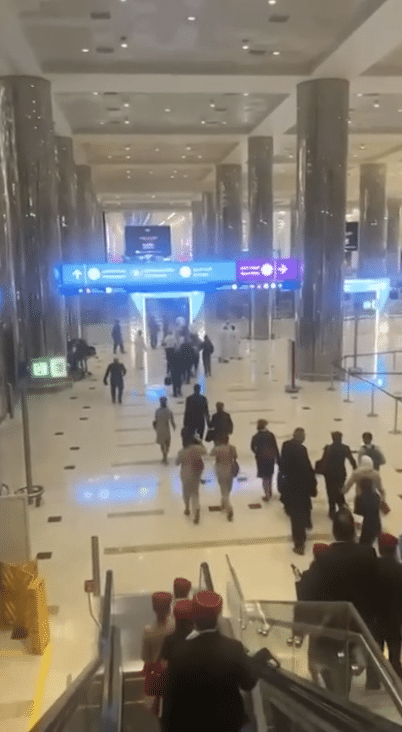
Passengers were evacuated from the Dubai International Airport on Sunday after a reported Iranian strike. The Iranians are said to have targeted travel hubs in U. S.-friendly Gulf states especially those regarded as safe, luxury destinations, reports said, after U. S. and Israeli forces struck Iran.
Images and video showed smoke-filled passageways in the airport littered with furniture and debris at Dubai International Airport, where officials said four staff had been injured.
Another explosion near the airport sent a thick plume of black smoke into the air coming several hours after the first hit – part of a fresh wave of Iranian strikes across the Middle East on Sunday.
Fresh travel warnings have been issued as escalating conflict in the Middle East continues to disrupt international aviation, leaving UK passengers facing cancellations and rapidly changing flight schedules.
On March 2, 2026, multiple departures from London Heathrow were grounded after airlines suspended service to several major Middle Eastern hubs amid widening airspace restrictions. Flights to Dubai, Doha, Abu Dhabi, Tel Aviv and Bahrain were among those affected, disrupting operations by carriers including Emirates, Etihad Airways, British Airways, Gulf Air and El Al.
Emirates said it has paused flights to and from Dubai until at least the afternoon of March 3, citing multiple regional airspace closures. Airlines are urging travelers to check flight status before heading to the airport, warning that further adjustments remain possible as security conditions evolve.
The travel disruption follows U.S. and Israeli military strikes on Iran, prompting missile exchanges and heightened security alerts across the region. UK authorities are advising nationals in affected areas to remain vigilant, monitor official travel guidance and maintain contact with consular services while aviation operations remain constrained.
On 28 February 2026, the United States and Israel conducted military strikes in Iran. Several Iranian leaders were killed in the strikes; early on March 1, Iranian state media confirmed that Supreme Leader Ali Khamenei had been killed, and declared 40 days of mourning and a seven-day national holiday
The coordinated U.S. and Israeli military strikes on Iran have caused severe, immediate disruptions to transportation and logistics across the Middle East, with significant impacts on global trade routes. The conflict has halted air traffic, closed key shipping lanes, and driven up energy-related transport costs.
It has triggered the most severe disruption to global air travel since the COVID-19 pandemic. Thousands of flights have been cancelled, hundreds of thousands of passengers have been stranded and major international hubs remain largely paralyzed due to direct missile strikes and widespread airspace closures
The attack has caused an effective closure of the Strait of Hormuz due to intense maritime security risks and Iranian retaliation. While the waterway is not officially blocked by a physical barrier, shipping traffic has plummeted by approximately 70%.
Today’s airports are busier than ever before and need cutting-edge technology solutions to address the challenge of efficiently screening the rapidly growing numbers of passengers. Rohde & Schwarz is deploying advanced security screening technology at airports worldwide, aiming to improve both efficiency and threat detection. The company is focusing on millimeter wave (mmWave) technology, coupled with artificial intelligence (AI) and machine learning (ML), to address evolving security challenges and increasing passenger volumes.
The company’s solutions are designed to detect both metallic and non-metallic threats, including weapons, explosives, and an emerging variety of items like 3D-printed weaponry, suspicious liquids and many other contrabands. Rohde & Schwarz aims to maintain stringent international security standards while enhancing the overall travel experience through its technology.
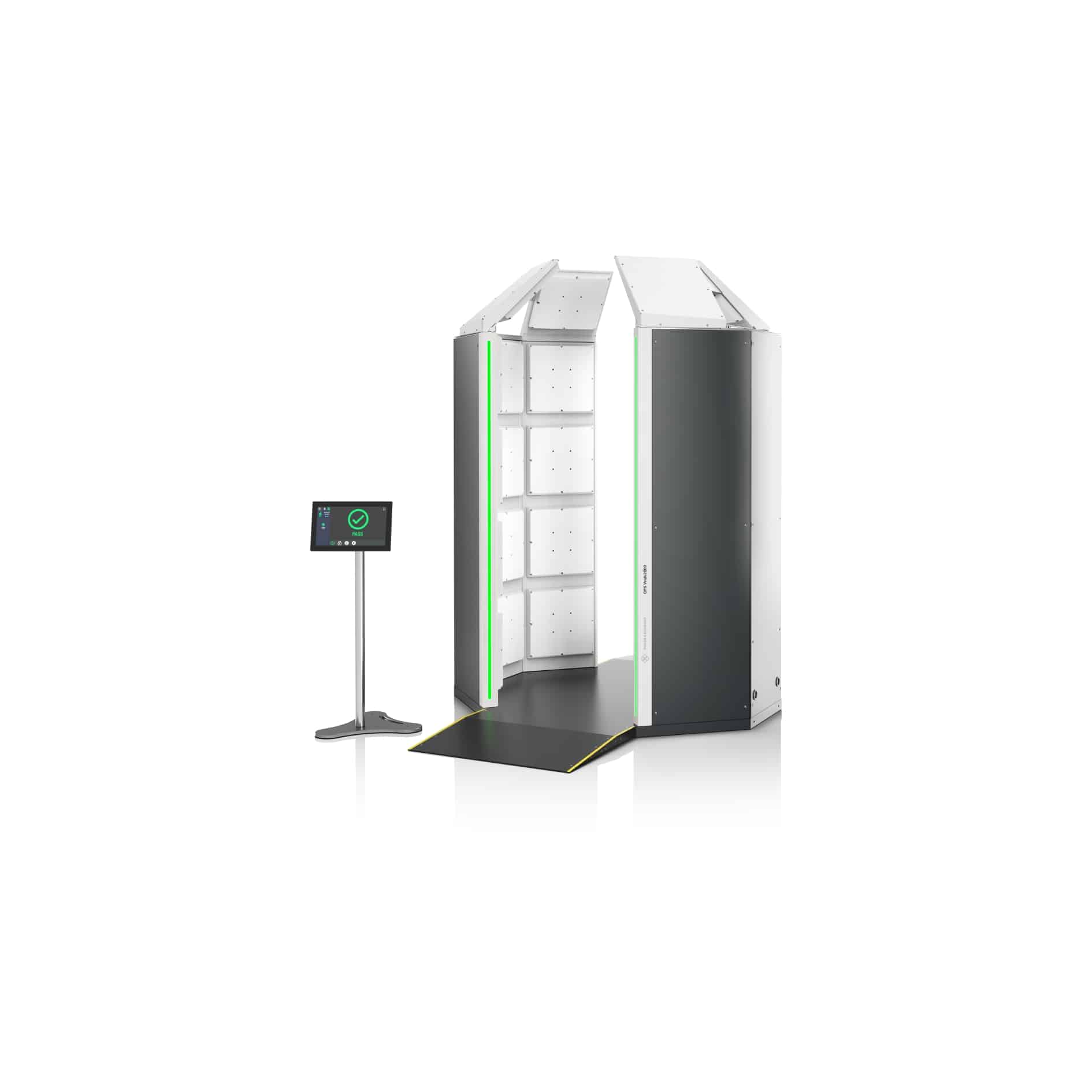
The QPS Walk2000 scanner represents a significant shift in screening methodology. Unlike traditional scanners requiring static poses, it allows passengers to walk through at a normal pace. The system detects threats in real-time and projects their location directly onto an avatar, enabling security personnel to quickly focus on potential issues, allowing for targeted search procedures like pat-downs. The scanner is designed to boost operational efficiency, reducing bottlenecks and improving throughput without compromising security through decreasing alarm rates.
Dallas-Fort Worth International Airport (DFW) adopted the technology already at the end of 2023, installing up to 12 scanners for employee screening in restricted areas. Previously, employee screening involved more time-consuming methods requiring divestment of outerwear and items. The scanner eliminates these delays, scanning employees quickly and efficiently without removing badges, jackets, or shoes. This system supports high-volume throughput during peak times, such as shift changes, making it a transformative solution for modern airport security needs.
To date, the QPS Walk2000 is the first scanner used for screening regular passengers at Frankfurt Airport. It is the first airport worldwide to regularly deploy 360° walk-through mmWave security scanner, setting a new standard of passenger screening and authorized for full-scale use by German Federal Police after a year-long trial. Several other airports are keen to deploy the walk-through technology either partly or fully with passengers and staff.
Just recently, Rohde & Schwarz has achieved a significant milestone, receiving approval of detection capability from the European Civil Aviation Conference (ECAC) for its most recent QPS Walk2000 device, allowing passengers to walk through the system at a much higher speed and also having enhanced capabilities to detect threats.
As security threats and requirements are evolving constantly, customers want to ensure that their investment in mmWave screening solutions is future proof and able to keep up with changing requirements and technological advancements. Therefore, it is essential that security equipment can be adapted and regularly updated to address specific security applications over operational lifetime. The Rohde & Schwarz roadmap focuses on continuously enhancing detection capabilities and adapting to evolving threats and specific application needs.
Rohde & Schwarz highlights a broader industry trend towards aligning innovation with stringent international standards as security solutions expand beyond aviation to protect critical infrastructure, aiming to deliver future-proof systems capable of adapting to emerging security threats.
Rohde & Schwarz is striving for a safer and connected world with its Test & Measurement, Technology Systems and Networks & Cybersecurity Divisions. For over 90 years, the global technology group has pushed technical boundaries with developments in cutting-edge technologies. The company’s leading-edge products and solutions empower industrial, regulatory and government customers to attain technological and digital sovereignty. As pioneers in modern security screening, the company’s millimeter-wave security scanners set new standards for security and efficiency. The QPS (Quick Personnel Scanner) has been improving security and travel comfort at airport security checkpoints since 2014. Its user-friendly design is highly regarded by both users and operators, and its efficient scanning technology maximizes detection rates with minimal false alarms. The scanner uses harmless millimeter-waves in combination with artificial intelligence for the reliable detection of dangerous items. This requires less security personnel and reduces operating costs. The advanced QPS Walk2000 offers even greater comfort, as it can penetrate multiple layers of clothing and allows individuals to walk through it at a normal pace. The security scanners are also used to protect critical infrastructures, government facilities, military compounds, data center entrances, production areas, logistic distribution centers, at border controls, in prisons, and at large-scale events. New legislation, such as the KRITIS umbrella law in Germany, makes such security measures mandatory.
Savox Communications announce the launch of the Noise-COM 200×2 the company’s next-generation tactical hearing protection and communications headset. Built for dismounted, mounted, and training environments, it delivers next-level audio clarity, rugged reliability, and seamless integration across the Savox tactical ecosystem -shaped by real user feedback from the field.
The Noise-COM 200×2 delivers reliable performance in every mission environment with its refined modular cable architecture, harsh environment durability, and advanced audio system that ensures superior speech intelligibility even in the toughest conditions.
Seamlessly integrated with the Savox dismounted soldier platform, it enables unified voice and data connectivity that boosts situational awareness and reduces cognitive load. The headset also interoperates effortlessly with Savox PackCOM wireless team communication systems — ensuring uninterrupted communications as operators move from on foot to in vehicle operations.
“Noise-COM 200×2 represents the next evolution of mission-critical hearing protection and communications headsets,” said Jerry Kettunen, CEO, Savox Communications. “Shaped by real field use and direct operator feedback, the improved NoiseCOM 200×2 keeps professionals increasingly protected, aware, and confidently connected, whether on foot, in vehicles, or across multi-platform missions.”
Superb audio and comfort in extreme environments
Savox audio delivers clearer speech and superior intelligibility in mission-critical environments. Enhanced user interface with improved controls for reliable gloved operation in harsh conditions. Comfort-optimized design with upgraded headband, back plates, and ear seals to reduce fatigue during extended missions. Improved environmental protection with an upgraded microphone connector and protective cap for increased resistance to water ingress and humidity.
Power that lasts, wherever the mission leads
Ultra-low power architecture enables up to 500 hours of operation in hear-through mode. Standardized, off-the-shelf AA battery compatibility simplifies logistics and avoids proprietary power dependencies. MIL-STD-810H verified performance across extreme temperatures from –40°C to +60°C.
Versatile, multi-role capabilit
Quick-change communication cable enables rapid switching between hearing protection and full communications configurations. Dual-side microphone slot supports left or right placement for shooter preference and compatibility with integrated head protection systems. Extended interconnection cable supports flexible helmet-mounted and headband use. Full ecosystem interoperability with the Savox dismounted soldier suite and seamless integration with Savox Pack-COM wireless systems—supporting consistent performance across dismounted and mounted operations.
Availability
Noise-COM 200×2 was showcased at EnforceTac 2026 and will be available through Savox Communications and authorized partners beginning Q1 2026. For more information, visit savox.com.
A fire broke out near the international terminal at Cape Town International Airport but was extinguished rapidly on February 24, 2026. The fire occurred near gate 4/5 in terminal A. That section of the airport was evacuated, check in systems went down and no passengers were moved through security to terminal A during that time.
International departures were suspended and incoming flights were diverted. Domestic flights were resumed with updates via individual airlines.
The event left travelers confused and they expressed frustration over the lack of public notices and delayed updates from airlines, reports of the event said.