Thunder Bay International Airport Announces Security Screening Expansion


The Thunder Bay International Airports Authority (TBIAA) announced a significant
expansion of its passenger security screening facilities, delivered in collaboration with the
Canadian Air Transport Security Authority (CATSA). The airport hopes the investment will significantly enhance the passenger experience while supporting the airport’s long-term continued growth and
operational resilience.

The project will modernize and expand the existing pre-board screening checkpoint, improving
passenger flow, and efficiency, while ensuring the highest standards of aviation security are
maintained. The expanded checkpoint will add a third screening line, to further increase overall
screening capacity, and meaningfully improve the passenger experience during peak travel
periods.

The project is being delivered using a Progressive Design-Build delivery model, an approach that
enables early collaboration, risk management and schedule certainty, ensuring the project
remains responsive to operational requirements. Construction will be led by Tom Jones
Corporation, with Form Studio Architects providing design services, Keewatin Aski Ltd. serving as
the owner’s representative, and overall project oversight for TBIAA led by TJ Ahvenniemi,
director of facilities, environment and sustainability.

“This has been a long, collaborative process since the contract was awarded in June, and we’re
proud of the project we’ve brought forward,” said Ahvenniemi. “It directly improves the passenger experience while addressing capacity pressures as flight and passenger volumes continue to grow.”

“We value our ongoing collaboration with TBIAA as we work together to enhance security
screening services for the traveling public,” said Rhoda Boyd, director, passenger experience for
CATSA. “This project will increase screening capacity during peak travel periods, supporting a
smoother flow through security for passengers travelling through Thunder Bay.”

Construction is scheduled to begin in mid January with completion targeted for June 2026. During
the project, TBIAA and CATSA will work closely to minimize impacts on passengers and airport
operations.

Azerbaijan Airlines Accelerates Retail Modernization with Accelya FLX Select

Accelya, a global leader in airline technology solutions has signed a multi-year agreement with Azerbaijan Airlines (AZAL), the country’s principal airline, to introduce NDC (New Distribution Capability) through FLX Select. 

The agreement positions AZAL as one of the airlines helping set the direction for modern airline retailing in its region, taking a deliberate step to modernize how offers are created and distributed across indirect channels. 

AZAL has selected FLX Select as a pragmatic way to rethink how its offers are brought to market, improving speed, consistency, and clarity at a time when customer expectations are rising and airlines are under increasing pressure to deliver richer, real-time offers with tangible results. 

FLX Select enables airlines to deploy NDC quickly and in a standardized way, removing legacy constraints that limit retailing flexibility and customer experience. By connecting airlines to an established ecosystem of travel sellers and aggregators, the service provides immediate market reach and helps airlines realise commercial value from NDC faster. 

By taking this approach, AZAL will deliver clearer, more personalized offers, improving how they are presented and sold across partner channels, while modernizing distribution across its indirect ecosystem. 

“We see modern retailing as a journey that airlines must own. By selecting FLX Select, AZAL is taking control of how its offers are created and distributed, and helping set the pace for retailing transformation in the region. This is about moving forward without being constrained by legacy models.” said Jamil Manizade, CCO at Azerbaijan Airlines. 

Andrew Wilcock, chief commercial officer at Accelya, added, “Airlines don’t modernize retailing by talking about it. They do it by taking control of how their offers are created, distributed, and changed in real time. That’s the shift we’re seeing here. 

By moving beyond legacy distribution models, airlines like Azerbaijan Airlines are turning NDC into a practical, commercial capability rather than an experiment. This sets a clear benchmark for the region, and the next step is simple: make modern distribution the default, not the exception.” 

FLX Select is part of Accelya’s FLX ONE platform, powered by Amazon Web Services. Through its strategic collaboration with AWS, Accelya delivers scalable, secure cloud solutions that support the modernization of airline Offers and Orders. According to independent research firm T2RL, Accelya supports nearly 50 percent of global NDC transactions. 

Press Release

Smiths Detection Delivers Fully Automated International Remote Baggage Screening System Between South Korea and the United States

Smiths Detection has enabled the launch of an automated International Remote Baggage Screening System (IRBS), setting a new global standard for cross-border aviation security and passenger processing between South Korea and the United States.

Driving Global Innovation

This achievement is led by Incheon International Airport Corporation (IIAC), which continues to set the global benchmark for innovation, digital transformation, and operational excellence in aviation. By pioneering the implementation of IRBS, Incheon has positioned itself not only as one of the world’s best airports, but as the world’s reference site for next-generation international aviation security.

Faster Connections, Frictionless Travel

Under the new IRBS model, the checked baggage of passengers departing from or connecting through Incheon International Airport (IIA) Terminal 2 is screened remotely by U.S. Customs and Border Protection (CBP) before landing in the United States. Once cleared, baggage is transferred directly to its destination, eliminating the traditional reclaim-and-recheck process at the first U.S. arrival airport, a breakthrough for International-to-Domestic (I2D) connections.

This removes a critical bottleneck, reduces connection times by up to 20 minutes, and significantly enhances both passenger experience and airport efficiency. While the system currently applies only to the Atlanta route, IRBS-enabled routes are expected to gradually expand to Minneapolis, Seattle, Los Angeles, Detroit, and Salt Lake City.

Enabled Through Advanced Screening Technology

The system is powered by SecurePort-IRBS-K, Smiths Detection’s remote screening platform, deployed with 22 software licenses and integrated with HI-SCAN 10080 XCT computed tomography (CT) X-ray systems installed at Incheon International Airport’s Terminal 2. The HI-SCAN 10080 XCT provides high-resolution, 3D volumetric imaging of checked baggage, enabling sophisticated threat detection while seamlessly integrating with Incheon’s advanced baggage handling facilities, screening equipment systems, and automation infrastructure. All images and metadata are exported using the DICOS V3.0 standard and securely transmitted to CBP through a fully compliant data-exchange environment.

A Vision That Shapes the Future

“The deployment of SecurePort-IRBS-K at Incheon marks a defining moment for the global aviation security industry,” said Sunghoon Eom, country manager, South Korea, Smiths Detection. “This is the first time a fully automated, DICOS-based baggage screening workflow has been executed between two sovereign countries. Incheon’s leadership and Smiths Detection’s vision made this milestone possible.”

Cymoril Métivier, global digital portfolio director, Smiths Detection, added: “IRBS is more than a system – it is a blueprint for the future of aviation. By leveraging the performance of the HI-SCAN 10080 XCT and advanced digital connectivity, Incheon International Airport Corporation has shown how airports can scale securely, eliminate friction points, and redefine the international passenger experience. This model will shape global airport strategies for years to come.”

Looking ahead, Smiths Detection stands ready to support IIAC’s continued innovation with the next-generation SDX 10080 SCT, the strategic successor to the 10080 XCT. Designed to be future-ready, the SDX 10080 SCT delivers enhanced image quality, improved efficiency, reduced energy consumption, and compliance with evolving global regulatory standards. Its seamless upgrade path ensures that Incheon can continue its modernisation journey with minimal disruption as passenger volumes and regulatory demands evolve.

Collaboration Fuels Transformation

Operational service for IRBS began in August 2025, following a multi-agency certification effort involving the Ministry of Land, Infrastructure and Transport U.S. Customs and Border Protection (CBP), the Transportation Security Administration, Incheon International Airport Corporation, Korean Air, Delta Air Lines, Leidos, and Pacific Northwest National Laboratory. All data handling and transmission meet the requirements of Korea’s Personal Information Protection Act and U.S. CBP security and cybersecurity protocols.

The implementation represents Phase 2 of a broader multi-year roadmap that will continue expanding remote screening capabilities.

Delta Passenger Restrained on Minneapolis to Tokyo Flight, Flight Diverts

A passenger became violent mid-flight on a Delta Air Lines flight from Minneapolis to Tokyo. The flight diverted to Anchorage after the crew was forced to restrain him using beverage carts.

The flight, DL121, an A350, took off on January 18 and was heading to Tokyo when cabin crew reported repeated non-compliance from a 64-year-old male passenger. According to court filings, he ignored seatbelt instructions, roamed the cabin and became increasingly aggressive after takeoff.

The passenger reportedly pushed a flight attendant into the aft galley at one point. Crew members stepped in and escorted him back to his seat, but he continued to attempt to move forward toward the front cabin.

Flight attendants then blocked the aisle with beverage carts to prevent his further advancement. Four off-duty personnel, including a retired air marshal, remained with him as the pilots diverted the aircraft to Anchorage, the last possible airport they could land at before continuing the transpacific crossing.

Green Oceans Raises Alarm Over National Security and Aviation Safety Risks from Offshore Wind Projects

In federal court on January 15, 2026, Judge Carl Nichols granted Empire Wind’s request to resume offshore construction (Case no. 1:26-cv-00004-CJN). Green Oceans, a nonprofit national environmental and public-interest organization, expressed concern that the ruling allows construction to proceed despite unresolved national-security and aviation safety risks associated with large offshore wind installations.

Empire Wind, owned by Equinor, consists of 54 turbines, beginning 12 nautical miles off the coast of Long Island. Green Oceans emphasized that extensive unclassified technical evidence demonstrates that offshore wind turbines can degrade military, aviation, and maritime radar systems. Secretary of the Interior Doug Burgum cited newly classified findings when issuing a federal moratorium on offshore wind construction on December 22, reinforcing concerns long raised in the public record.

Lisa Knight, M.D., Ph.D., President of Green Oceans, stated that while the organization respects the Court’s decision, significant safety and security questions remain unanswered.

“We respect the Court’s ruling,” Knight said, “but the federal government ordered a suspension of offshore wind construction based on newly classified findings. While the details remain classified, the decision itself demonstrated that a serious national-security vulnerability exists. Allowing construction to resume before that vulnerability is fully addressed exposes both our national defenses and the public to unnecessary risk.”

Knight explained that Empire Wind’s turbines rise more than 900 feet above sea level and are located near three major commercial airports serving nearly 150 million passengers annually.

“There is no indication in the record that Empire Wind ever conducted line-of-sight analyses for nearby airport surveillance radars,” Knight said. “In fact, Empire Wind’s own airspace obstruction evaluation explicitly states: ‘This analysis did not consider electromagnetic interference on communications systems, navigation, or surveillance radar systems.’”

“The same filing,” Knight added, “indicates that the Federal Aviation Administration has not completed full hazard determinations for turbines located beyond 12 nautical miles offshore.”

“Turbines beyond 12 nautical miles can be within line-of-sight of critical radar system and thus will still pose risks to civilian and military aircraft,” Knight said. “Yet no comprehensive evaluation of those risks appears to have been completed.”

Green Oceans Trustee Michael Lombardi, who has extensive experience operating in Rhode Island waters and supporting defense-related research programs, noted that the scale and location of offshore wind projects raise unresolved security concerns across air, surface, and subsurface domains.

“Fully mitigating those risks would require billions of dollars in taxpayer-funded measures,” Lombardi said, “yet there is no indication that such costs were evaluated or disclosed as part of the project approvals.”

Green Oceans also questioned claims of irreparable harm advanced by the developer.

“Empire Wind’s Economic Impacts analysis reports employment in job-years rather than permanent positions,” Knight explained. “When those figures are annualized, they correspond to approximately 52 permanent jobs, not the larger employment totals often cited.”

Green Oceans called on policymakers and the public to ensure that national security, aviation safety, and environmental protection are not subordinated to construction timelines or commercial pressure.

“No commercial interest should ever take precedence over the safety and security of the nation,” Knight said.

India to Equip Customs Officers at Airports With Body Cameras

Customs officers manning Red Channel areas at India’s international airports will now be required to wear body-worn cameras to boost transparency and improve traveler experience, The Economic Times reported.

The Central Board of Indirect Taxes and Customs (CBIC) issued the directive in December 2025 through an internal instruction to field formations. The Red Channel handles passengers carrying dutiable or restricted items, a process that often involves detailed checks and potential disputes.

Under the new guidelines, officers must use body cameras not only at Red Channel counters but during any interaction with passengers across airport premises, including questioning, baggage inspections and duty assessments. Passengers must be notified that they are being recorded.

Footage will be stored for 90 days, with the option to retain it longer for investigations or legal proceedings. The CBIC said the move aligns with international best practices and is aimed at strengthening transparency, accountability and public trust in customs operations.

Officials expect the measure to reduce conflicts, streamline interactions and support the government’s broader push toward technology-driven governance and smoother passenger facilitation.

NOTAM to Suspend all Commercial Flights Issued by Tehran

Tehran has issued a NOTAM (Notice to Airmen) suspending all commercial flights, allowing only select international operations with prior clearance. When a nation takes radical measures such as grounding its skies, it can signal either anticipation of incoming threats or an effort to prevent departures.

The NOTAM was issued January 14, 2026, and suspends most commercial flights, allowing only pre-cleared international operations due to escalating nationwide anti-government protests, high tensions, internet blackouts and security concerns. The move has prompted airlines to reroute or cancel flights, with significant risk of mis-identification by air defenses, recalling the past shoot down of Flight 752. 

Governments are advising people to leave Iran if it is safe to do so, as flights are disrupted, though some land crossings remain open.

Press Release

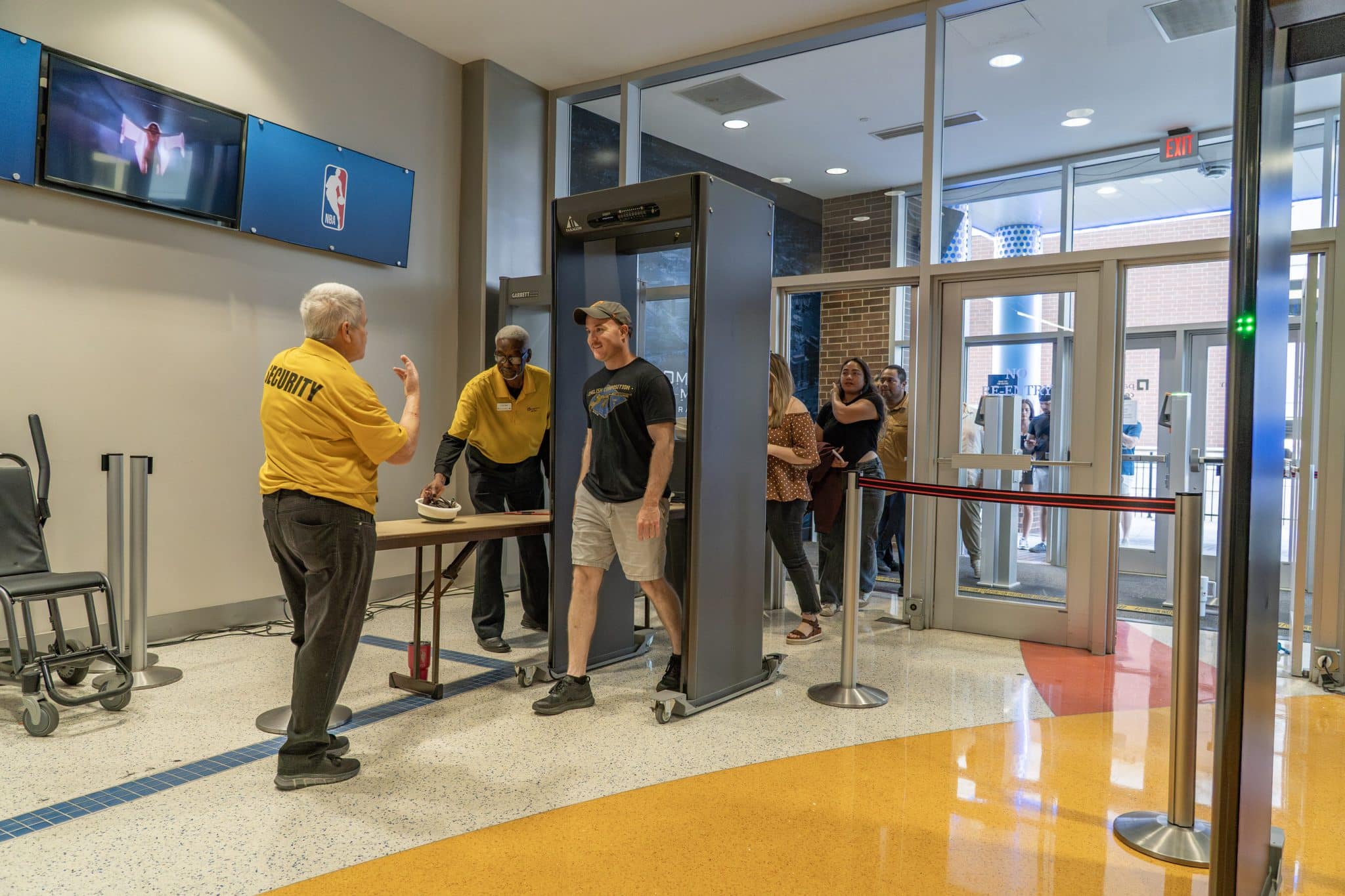
Garrett Metal Detectors Achieves Industry-Leading ISO Certification

GARLAND, Texas, Jan. 8, 2026 – Texas-based Garrett Metal Detectors announced today that it had been officially certified as ISO 14001 and ISO 45001 compliant, in addition to its existing ISO 9001 compliance. Together, these certifications represent a profound commitment to quality, environmental, and safety management systems that will set the company apart in the years to come.

ISO is the most recognized standard worldwide for management systems, and Garrett’s increased adoption of its quality, environmental, and safety policy procedures reflect a growing global concern not just for quality products, but also for quality production methods and care for employees. In particular, Garrett recognizes that increasing international resolve toward environmental responsibility and employee safety is a positive development, and that manufacturers should invest in standardizing and communicating their efforts in these areas for the benefit of their employees, their neighbors, and a global customer base. This commitment to continual improvement entails six internal audits per year, two yearly external audits, and a formal recertification process every five years.

“This was not a trivial investment on Garrett’s part,” said Steve Novakovich, CEO of Garrett Metal Detectors, “The ISO standards are rigorous and detailed, and we at Garrett are committed to adhering to those standards with meticulous enthusiasm. But we were prepared. Our long experience with the ISO 9001 quality management system gave us the tools to build out new programs of accountability and excellence within the frameworks of the 14001 and 45001 standards. Garrett’s achievement of these two additional standards will bolster our reputation as a leading manufacturer of metal detection equipment and honor the values of authenticity and care that this company was built upon.”

All genuine Garrett products are manufactured at Garrett’s Garland, Texas facility with appropriate design patents and trademark protections. Garrett encourages security customers to insist on buying genuine products from reputable companies to ensure quality, product performance, and effective security operations. For more details on Garrett’s ISO certifications, visit: ISO Certifications – Garrett.

Motorola Solutions Expands AI-Powered Security Platform to Solve Complex Safety and Operational Challenges

Motorola Solution will showcase how its latest advancements in AI are helping critical enterprises and security providers maintain safety and awareness across vast operations, moving from reactive incident detection to proactive response, at Intersec, taking place from January 12 to 14.

Avigilon Visual Alerts uses intuitive conversational interfaces to significantly expand the catalogue of visual events that can be detected across large volumes of camera feeds. Security teams can easily create custom alerts unique to their site, such as “unauthorized vehicle near shut-off valve” or “blocked fire exit.” Visual Alerts scans the camera network for these scenarios to notify operational and security staff to triage and quickly respond. By bringing these generative AI capabilities directly on-premise without requiring cloud connectivity, the company is transforming video security from an intrusion and security focused tool into a site-specific operational engine, enabling critical industries to identify a vast array of safety, compliance, and logistical risks that extend far beyond traditional security threats.

“The power of our AI-enabled video and access control solutions isn’t just its ability to process data, but its capacity to give security teams more of their most precious resource – time,” said Jehan Wickramasuriya, senior vice president, Security & Resilience Software, Motorola Solutions. “We are unlocking the full potential of video by dramatically increasing the breadth of what we can detect. Whether upholding compliance in a refinery or keeping patients safe in a hospital, we’re enabling our customers to tailor their detection systems to the specific, nuanced reality of their daily operations.”

Visual Alerts supports sectors that are vital to the Middle East’s economy, including oil and gas, fueled by soaring output and extensive reserves, and healthcare, spurred by major government investments. The solution provides real-time, AI-powered detections to enhance safety, security and compliance, from alerting workers to hazards, to quickly identifying patient falls and constantly monitoring restricted zones.

“As a 300-bed hospital that occupies almost 30,000 square meters of land, we have large numbers of people and expansive physical resources to protect,” said Abdulrub Alsadeek, IT Director, Dr. Sulaiman Al Habib Medical Center (HMG) in Jeddah, Saudi Arabia. “During an incident, our AI-powered Avigilon security platform becomes a powerful tool to help our security teams reconcile data, understand different events across our vast operations and take immediate action based on relevant, verified information.”

Other highlights from Motorola Solutions at Intersec Dubai complement Visual Alerts, including long-range cameras that provide highly accurate detection capabilities in extreme environments and operational resilience software that helps enterprises anticipate, prepare for and more efficiently respond to events.

“For the critical industries we serve, our AI technologies are proven to enhance security, safety, and operational efficiency without adding complexity for staff,” said Pedro Simoes, corporate vice president, Video Security & Access Control, Motorola Solutions. “By surfacing essential data facilitated by privacy-aware AI analysis on-premises, we help users focus on critical events and make informed decisions to protect people, property and places.”

Attendees can experience Motorola Solutions’ safety and security ecosystem, including AI-powered on-premise and cloud-connected video and access control offerings at Sheikh Saeed Hall – stand SA-C11 at Intersec Dubai.

Türkiye Introduces New Fines for Standing Before Fully Stopping at Gate

Türkiye has officially tightened its in-flight safety rules. Now, passengers who rush to stand, unbuckle their seatbelts and/or reach for the overhead bins before the aircraft has fully stopped at the gate, can can be subject to fines of up to $70.

The new regulation comes after repeated safety concerns during taxiing, when the aircraft is still in motion and sudden stops, which can lead to injuries. Airlines operating in Türkiye are now required to update their in-flight announcements to warn travelers about these potential penalties.

Travel guides stress if you’re flying to, from or within Türkiye, stay buckled until the seatbelt sign turns off — not just for safety, but now to avoid a fine too.